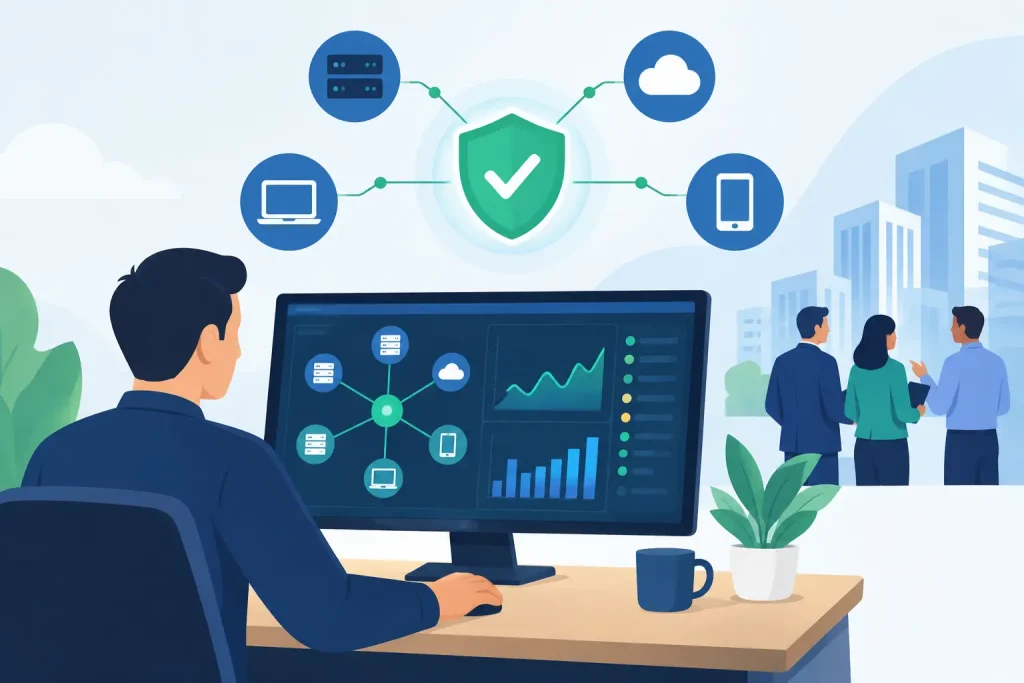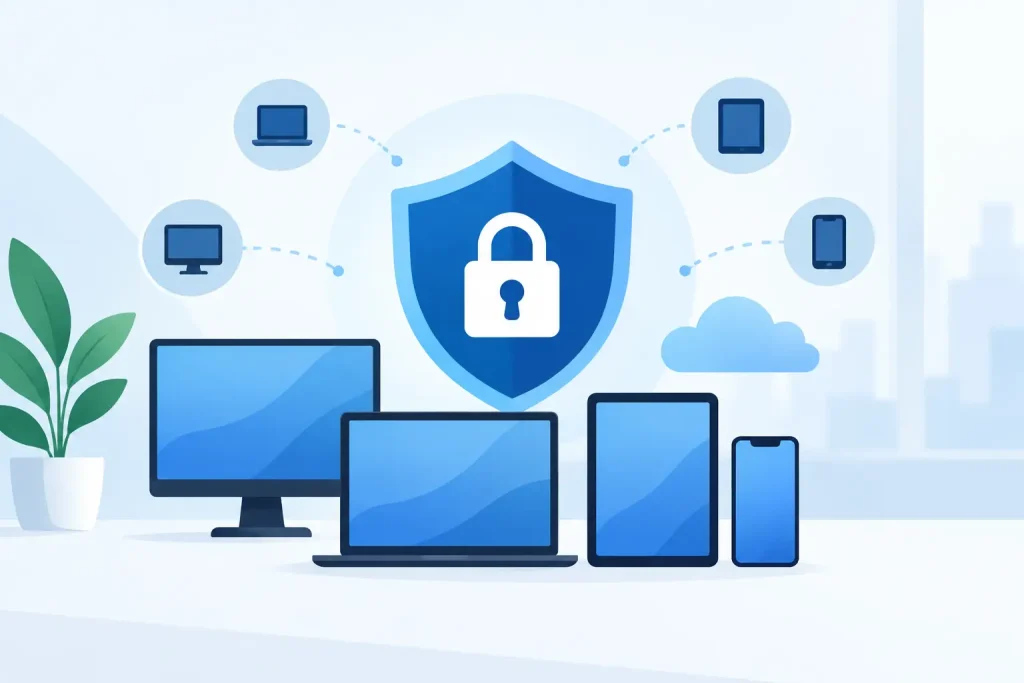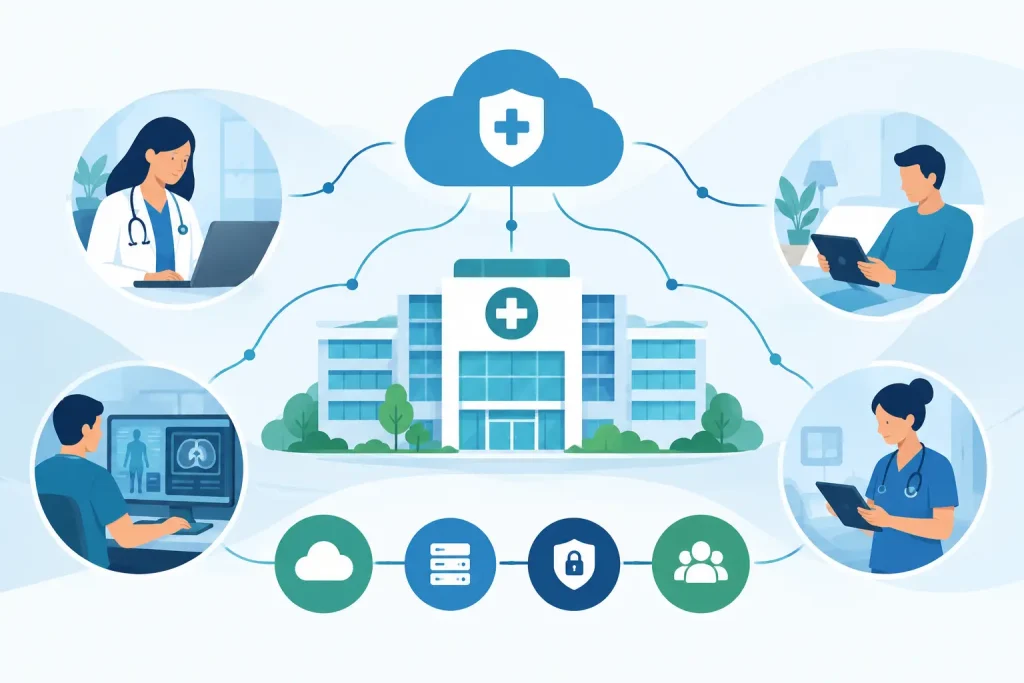

A managed endpoint security guide should start with a business reality: every laptop, mobile device, workstation, server, and tablet is a potential path into your environment. For a multi-site healthcare group, senior living operator, financial institution, or property portfolio, one compromised endpoint can disrupt patient services, expose sensitive records, interrupt payments, or create a costly recovery effort.
Endpoint security is not simply antivirus installed across company devices. It is an operating discipline that combines visibility, prevention, response, policy enforcement, and accountable support. The objective is straightforward: reduce the chance that a device becomes an entry point, and limit the operational impact when something gets through.
What Managed Endpoint Security Actually Covers
An endpoint is any device that connects to your network, applications, or business data. That includes company-issued laptops and desktops, mobile phones, point-of-sale terminals, shared workstations, virtual servers, and sometimes personally owned devices used for work.
Managed endpoint security places ongoing responsibility for protecting those devices with a technology partner or internal team operating a defined security program. The provider should not just deploy a tool and send a monthly report. It should monitor alerts, maintain endpoint policies, investigate suspicious activity, coordinate remediation, and document what happened.
A complete service commonly includes endpoint detection and response, managed antivirus, device monitoring, patch management, disk encryption, identity controls, vulnerability management, and security reporting. The exact mix depends on risk, compliance obligations, device types, and the organization’s ability to respond internally.
The distinction matters. A security product detects signals. A managed security service gives those signals an owner.
Why Endpoint Risk Becomes an Operations Problem
Most endpoint incidents do not begin with a dramatic breach. They begin with an ordinary event: a user clicks a convincing email, reuses a password, installs an unauthorized application, delays a software update, or connects an unmanaged device to a business network.
The technical problem can become an operational problem quickly. Ransomware on a shared workstation may spread to file shares. A stolen unencrypted laptop may trigger notification obligations. An unpatched device at a remote location can give an attacker a foothold into the wider environment. If the affected device is tied to patient intake, access control, classroom operations, or tenant services, downtime becomes visible to customers and staff.
That is why endpoint security cannot sit apart from networking, identity, backup, and help desk operations. If a device must be isolated, someone needs to understand its business role, its network dependencies, its user, and the fastest safe path to restoration. One team that owns the whole stack can make faster decisions because it is not waiting for five vendors to determine where responsibility begins.
The Core Layers of a Managed Endpoint Security Program
No single control is sufficient. Effective programs use layers that overlap, so one missed patch or user mistake does not automatically become a business interruption.
Visibility and asset control
You cannot protect endpoints you do not know exist. Start with an accurate asset inventory that identifies each device, its owner, location, operating system, security status, and business purpose. This is particularly important for organizations with remote employees, shared devices, acquisitions, or multiple sites.
Inventory must be continuously maintained, not treated as a spreadsheet updated once a year. Devices appear, move, and disappear. A managed platform should flag endpoints that have stopped checking in, lack required software, or fall outside approved standards.
Prevention and policy enforcement
Modern endpoint protection should block known malware, suspicious behavior, malicious scripts, unsafe downloads, and unauthorized applications where appropriate. Policies should also enforce baseline standards such as screen locks, encrypted drives, supported operating systems, and restricted local administrative rights.
There are trade-offs. Overly aggressive controls can disrupt specialized applications, clinical systems, point-of-sale workflows, or facilities technology. Weak controls make support easier in the short term but create a wider attack surface. The right approach is to standardize the baseline, document exceptions, and review those exceptions regularly.
Detection, investigation, and response
Endpoint detection and response tools collect telemetry that can reveal behavior traditional antivirus may miss. Examples include unusual credential activity, attempts to disable security controls, rapid file encryption, or suspicious connections to external infrastructure.
Detection only adds value when someone reviews and acts on it. A managed service should define who monitors alerts, how events are triaged, when devices are isolated, who contacts your team, and what evidence is retained. For critical organizations, the response process should account for after-hours events and location-specific operational needs.
Patch and vulnerability management
Attackers frequently exploit known software vulnerabilities because patches are delayed or devices are missed. Patch management is therefore one of the highest-value endpoint controls, but it requires more than enabling automatic updates.
A sound process prioritizes critical vulnerabilities, tests updates where business applications are sensitive, schedules maintenance around operational windows, and verifies successful installation. If a patch cannot be applied, the risk should be documented with a compensating control and a clear plan for remediation.
Recovery readiness
Endpoint protection reduces risk. It does not eliminate it. When a device is compromised, recovery depends on tested backups, known-good configurations, documented access procedures, and a clear incident response plan.
For some organizations, reimaging a laptop is acceptable. For a specialized workstation attached to business-critical equipment, recovery may require vendor coordination and careful change control. Your endpoint strategy should identify these differences before an incident forces rushed decisions.
Managed Endpoint Security Guide: Questions to Ask a Provider
A provider’s technology stack matters, but accountability matters more. Before selecting a managed endpoint security partner, ask how the service works after an alert appears.
Request clear answers to these questions:
- Who monitors endpoint alerts, and during what hours?
- What events trigger immediate containment or escalation?
- Can the provider isolate a compromised device without waiting for a separate vendor?
- How are patches, exceptions, and unsupported operating systems tracked?
- What reporting shows device compliance, open vulnerabilities, and incident activity?
- How does the provider coordinate endpoint response with network, identity, backup, and help desk teams?
The answers should be operationally specific. “We provide 24/7 protection” is not enough if no one can explain escalation paths, response authority, or how a device is restored to service. Real engineers, not a 1-800 black hole, make a measurable difference during an active security event.
Building a Practical Rollout Plan
The best rollout sequence depends on the size and complexity of the environment, but it should begin with assessment rather than tool selection. Identify endpoints, critical applications, existing security controls, network segmentation, remote access methods, and gaps in patching or administrative privileges.
Next, establish a standard endpoint baseline. Define which devices are supported, what protections are mandatory, how encryption and updates are enforced, and who approves exceptions. This is also the time to align security policy with HR, compliance, operations, and facilities leadership. Security rules that ignore how people actually work are often bypassed.
Then deploy in phases. A pilot group can expose compatibility issues before broad enforcement. High-risk groups, such as administrators, finance users, remote employees, and users with access to regulated data, may deserve earlier attention. Multi-site organizations should also account for bandwidth, local support coverage, and location-specific applications.
Finally, measure the program. Useful metrics include endpoints under management, devices missing critical patches, encryption compliance, time to contain high-severity threats, repeat incident types, and unresolved exceptions. Metrics should support decisions, not create a reporting exercise with no owner.
Where Managed Services Deliver the Most Value
Managed endpoint security is especially valuable when internal IT teams are stretched across user support, projects, connectivity issues, and vendor coordination. It gives the organization a disciplined process without requiring every security function to be staffed internally.
It is also a strong fit when endpoint security must connect to broader infrastructure accountability. Southeast Networks approaches managed technology as an integrated environment: endpoint protection, network controls, connectivity, help desk support, and recovery planning need to work together when business operations are at stake.
For organizations with a mature internal security team, a managed provider may still play a focused role. The provider can handle endpoint monitoring, patch operations, remote-site support, or after-hours response while internal leaders retain policy and governance authority. The model should fit the organization, not force it into a generic service package.
Security improves when responsibilities are explicit, devices are visible, and response decisions are made before an incident. Start by identifying the endpoints your business cannot afford to lose, then make sure the people responsible for protecting them have the authority, tools, and operational context to act quickly.