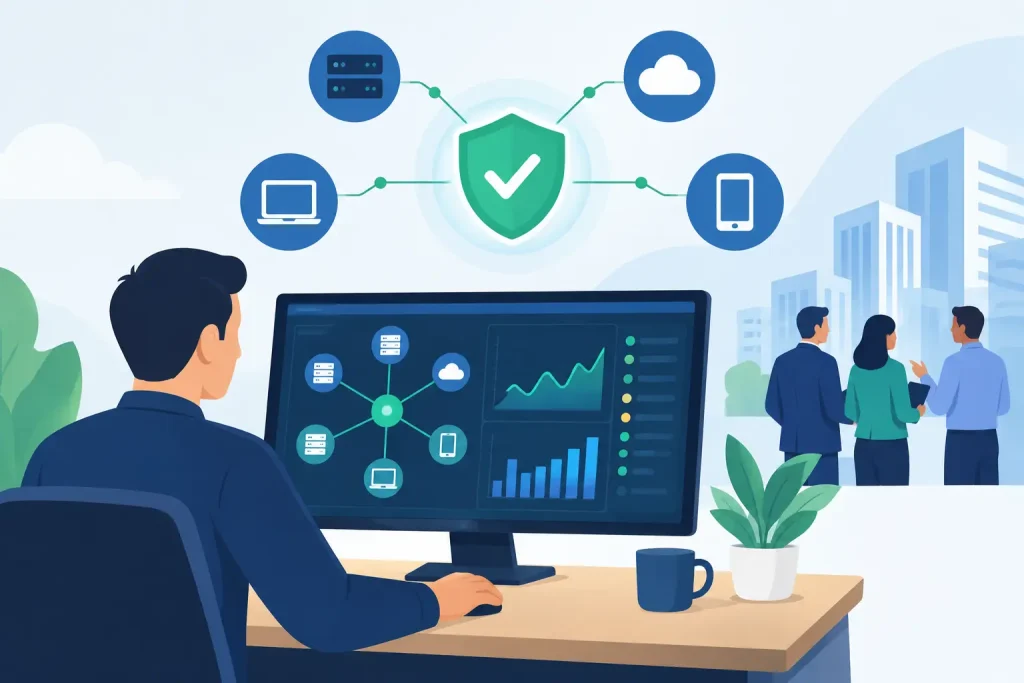

A cybersecurity provider can show you a polished dashboard, send a monthly report, and still leave your organization exposed when an incident occurs. That is why learning how to choose managed cybersecurity starts with a more practical question: who is accountable for protecting operations when a threat affects users, systems, connectivity, or an entire location?
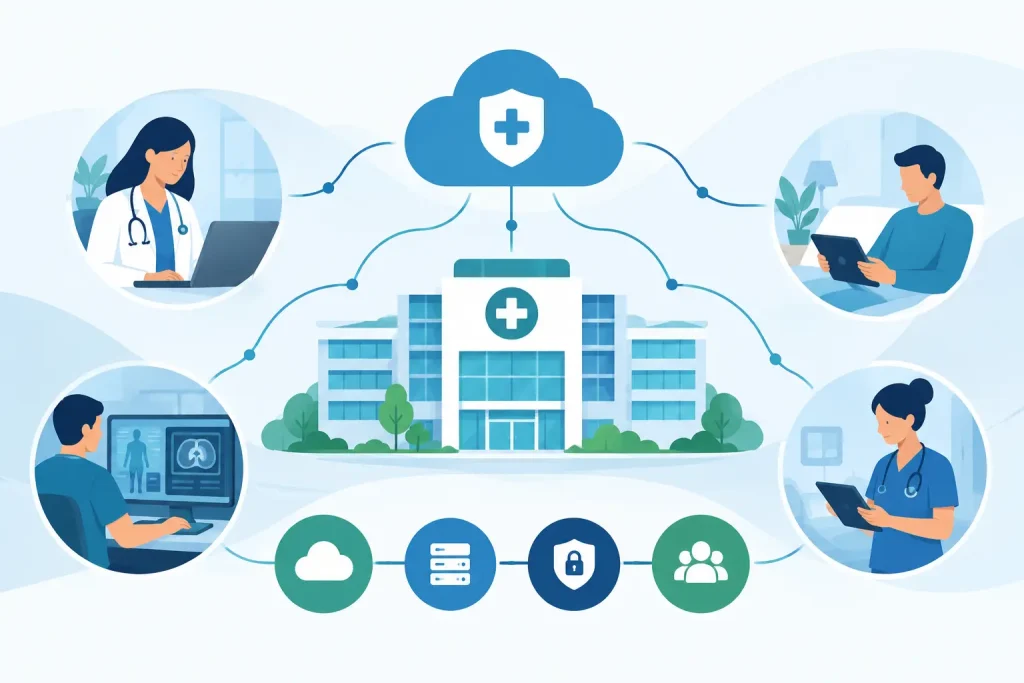
For healthcare, senior living, financial services, retail, education, and multi-site organizations, cybersecurity is not a standalone software purchase. It is an operating function tied to uptime, compliance, customer trust, and business continuity. The right managed partner reduces uncertainty across the environment. The wrong one adds another vendor to chase when something breaks.
Start With the Business Risks You Cannot Accept
Every organization has different priorities, but the selection process should begin with the consequences of failure rather than a list of security tools. A ransomware event that disrupts a senior living community, prevents a clinic from accessing records, or takes a retail payment system offline has operational and reputational costs that extend well beyond the IT department.
Define the systems and workflows that must stay available. Consider cloud applications, email, point-of-sale systems, phone systems, electronic records, building access, Wi-Fi, Internet circuits, and remote access. Then identify what happens if each is compromised or unavailable for an hour, a day, or longer.
This exercise also exposes gaps in ownership. If one provider manages endpoints, another manages the firewall, a carrier owns the circuit, and an internal employee is responsible for backups, an incident can quickly turn into a vendor blame cycle. A managed cybersecurity provider should be able to explain where its responsibility begins, where it ends, and how it coordinates the pieces in between.
Look Beyond the Security Toolset
Most managed cybersecurity firms can name the same categories of technology: endpoint detection and response, managed firewalls, email security, multi-factor authentication, vulnerability management, security awareness training, backup, and monitoring. Those controls matter, but a tool list does not tell you whether the service will perform when conditions are difficult.
Ask how the provider operates those tools. Who reviews alerts? What is monitored around the clock, and what is only reviewed during business hours? How are suspicious events investigated before they become tickets? What happens when an active threat is confirmed? Clear answers should include escalation paths, response expectations, communication procedures, and the authority to take protective action.
A provider that only forwards alerts is not providing meaningful security operations. Your team should not have to interpret technical notifications at 2:00 a.m. or decide whether a compromised device needs to be isolated. You need real engineers who can assess the event, contain risk, communicate in business terms, and document what happened.
How to Choose Managed Cybersecurity for a Complex Environment
The best provider for a single-office professional firm may not be the right fit for an organization with multiple sites, guest Wi-Fi, remote users, regulated data, voice systems, and several Internet connections. Complexity changes the job.
A capable managed cybersecurity partner should understand the dependencies between security and infrastructure. A firewall policy may affect a cloud application. A network segmentation issue may expose medical devices or payment terminals. A failed circuit may force traffic onto a backup connection that needs the same security controls as the primary path. Security decisions cannot be made in isolation from network design, connectivity, identity management, and disaster recovery.
This is where a single-source operating model creates value. When one team owns managed IT, networking, carrier coordination, and security, it can identify root causes faster and reduce handoffs. That does not mean every organization needs one provider for every service. It does mean the cybersecurity provider must work effectively across the full stack and accept accountability for the parts it manages.
During evaluation, share a realistic picture of your environment. Include locations, user counts, endpoints, cloud platforms, current vendors, compliance needs, remote access requirements, and known pain points. Watch whether the provider asks informed follow-up questions. A serious assessment should uncover dependencies and risks, not produce a generic package after a short sales call.
Evaluate Response, Not Just Prevention
No security program can guarantee that an employee will never click a malicious link or that a new vulnerability will never emerge. Prevention remains essential, but response capability is what determines how much damage an incident causes.
Ask potential providers to walk through an actual incident scenario. For example, what happens if a user enters credentials on a fraudulent Microsoft 365 login page? The answer should cover detection, identity protection, session termination, password resets, endpoint review, mailbox investigation, documentation, and executive communication. If the provider uses vague phrases such as “we will look into it,” press for timing and ownership.
The same applies to ransomware. Can the provider isolate endpoints? Can it validate whether backups are recoverable? Can it help prioritize restoration based on operational impact? Does it coordinate with your cyber insurance carrier, legal counsel, or incident response firm when needed? A managed service is only as strong as its actions during a high-pressure event.
Service levels should be measurable. Understand response-time commitments, after-hours coverage, incident severity definitions, and who can authorize emergency changes. Also ask whether support is handled by engineers familiar with your environment or routed through a generalized call center. Real accountability is visible in the operating model, not only in the contract language.
Confirm That Compliance Is Operational, Not Promotional
Many organizations face obligations tied to HIPAA, PCI DSS, GLBA, FERPA, state privacy laws, insurer requirements, or customer contracts. A provider does not need to act as your legal adviser, but it should understand how technical controls support your compliance responsibilities.
Look for evidence-based practices: asset inventories, access reviews, vulnerability remediation records, backup testing, security policy support, risk assessments, and documented incident procedures. The provider should be able to produce useful reporting for leadership, auditors, insurers, and boards without creating a monthly pile of unread technical data.
Compliance also requires discipline over time. A point-in-time assessment is valuable, but it is not the same as ongoing management. New users, devices, applications, locations, and vendors create fresh exposure. Choose a provider that treats security as a managed process with regular review, remediation tracking, and clear reporting.
Make Sure the Commercial Model Supports Good Security
The cheapest proposal is often cheaper because it excludes the work that makes security effective: continuous monitoring, remediation, configuration management, testing, strategic reviews, and incident support. Compare scopes carefully. One provider may include firewall management but not after-hours response. Another may deploy endpoint protection but charge separately to investigate alerts. Those differences matter during an incident.
Predictable monthly billing is valuable, especially for multi-site organizations, but clarity matters more than a simple per-user price. Confirm what is included, what triggers project fees, how new locations are onboarded, and how licensing changes are handled. Ask for a clear responsibility matrix that identifies the provider, your internal team, and any third parties.
You should also understand the transition plan before signing. A mature provider can explain how it will document the environment, deploy controls without disrupting operations, coordinate with existing vendors, and establish a baseline for improvement. Security onboarding should be methodical, not a rushed software rollout.
Choose a Partner That Can Explain the Work Clearly
Strong cybersecurity providers do not hide behind acronyms. They can explain technical risk to an IT manager while also giving an operations leader a clear view of business impact, decision points, and next steps. That communication becomes critical when leadership needs to approve an investment or respond to an incident.
At Southeast Networks, the standard is one team that owns the whole stack, from connectivity and network infrastructure to managed IT and layered security. That model is especially useful when uptime, vendor coordination, and rapid escalation directly affect the people you serve.
The right choice will not be the provider with the longest list of products. It will be the partner that understands your operating environment, responds with discipline, and is prepared to own the outcome when technology becomes a business problem. Before making a decision, ask each finalist to show exactly how they will protect the work your organization cannot afford to stop.