
A suspicious login at 2:13 a.m. is not a security event because a dashboard says it is. It becomes a business problem when no one determines whether that login is routine, compromised, or the first step in an attack. For organizations with multiple locations, regulated data, and limited internal security coverage, the question of what does managed detection include is really a question of ownership: who is watching, who can make a decision, and who acts before disruption reaches operations.
Managed detection is commonly delivered as Managed Detection and Response, or MDR. It combines security telemetry, continuous monitoring, human analysis, and defined response actions. The exact service model varies by provider, but the purpose remains the same: identify meaningful threats early and contain them with less delay, less alert fatigue, and less uncertainty.
What Does Managed Detection Include?
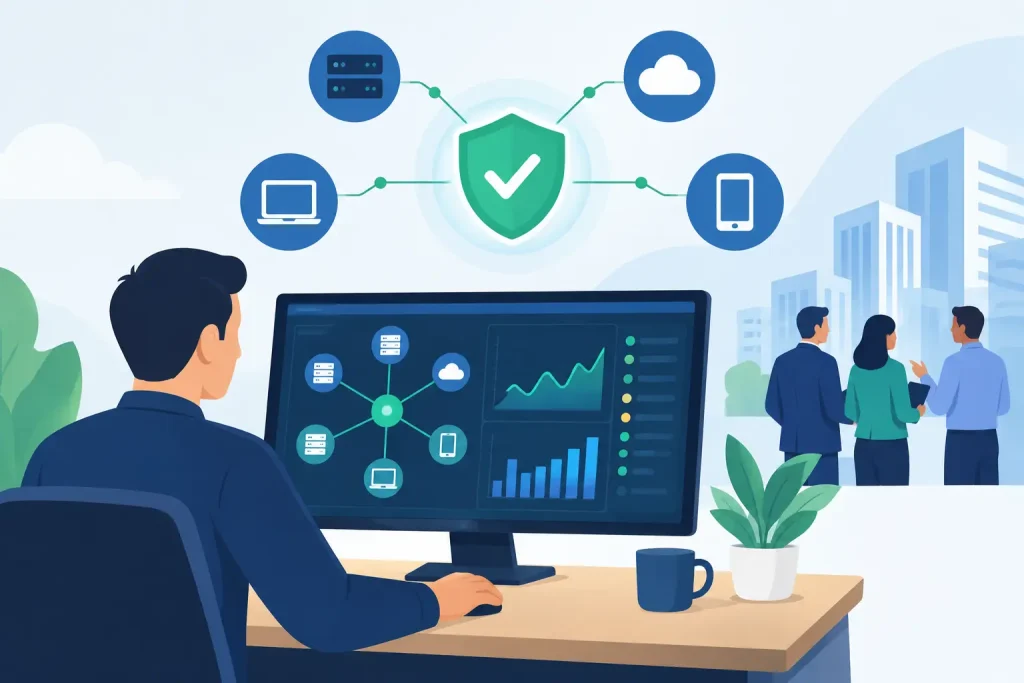
A credible managed detection service is more than a software license with a support number attached. It should establish a working security operation around the organization’s environment. That operation usually begins with visibility across endpoints, identities, cloud services, firewalls, and email systems, then applies detection logic and expert review to identify activity that deserves action.
The scope should be clear before deployment. A provider may monitor only endpoint devices, for example, or it may extend into Microsoft 365, network logs, cloud platforms, and identity systems. Broader visibility generally produces better context, but it also requires careful integration, tuning, and agreement on who owns each response decision.
Security telemetry and data collection
Detection cannot work without usable data. Managed detection commonly includes deployment and management of endpoint detection and response tools, or EDR, on servers and user devices. These tools record process activity, file changes, network connections, suspicious command execution, and other behavior that can indicate compromise.
For many organizations, endpoint data is necessary but not sufficient. An attacker may use valid credentials, access a cloud application, or manipulate email rules without triggering a traditional endpoint alert. A well-designed service can also ingest identity, email, firewall, DNS, and cloud logs to connect events across the environment.
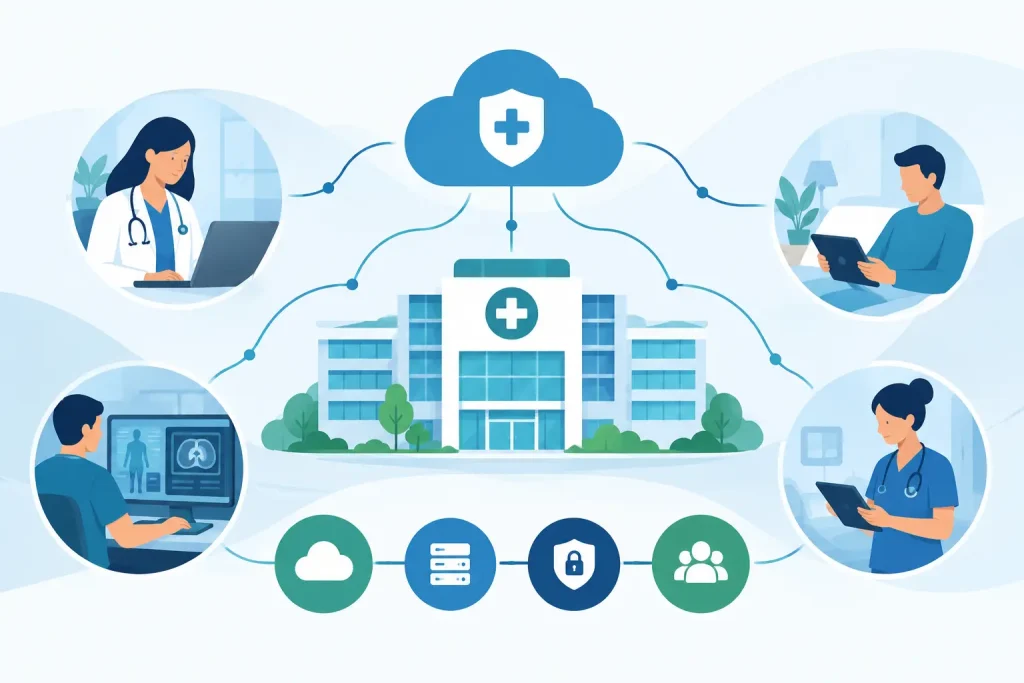
That distinction matters in healthcare, financial services, senior living, education, and distributed retail. A compromised account can affect patient information, payment workflows, resident systems, classroom platforms, or point-of-sale operations long before a device displays obvious signs of malware.
24/7 monitoring and alert triage
Managed detection includes continuous monitoring, but the phrase deserves scrutiny. Some offerings generate alerts around the clock while relying on a client’s team to investigate them. Others provide an active security operations function with analysts who review alerts, validate suspicious behavior, and escalate confirmed threats.
The difference is operationally significant. Security tools can generate thousands of alerts from ordinary business activity: new software, remote support sessions, password resets, unusual travel, or a server restart. A managed detection team separates routine noise from credible risk by examining the user, device, timing, affected systems, and related events.
This triage function is one of the primary reasons businesses use MDR. It reduces the burden on internal IT teams that already manage support tickets, infrastructure changes, vendor coordination, and day-to-day uptime. More alerts are not better security. Faster, more accurate decisions are.
Threat hunting and detection engineering
Good managed detection is not limited to waiting for a known alert. It also includes proactive threat hunting: analysts searching for patterns that may evade automated rules, such as unusual administrative activity, persistence techniques, abnormal data movement, or lateral movement between systems.
Detection engineering supports that work. Analysts tune rules, apply intelligence on emerging attacker methods, and refine detection logic based on the organization’s environment. A hospital’s after-hours access patterns, for example, will not look like a commercial property management firm’s. Detection should account for how the business actually operates rather than treating every exception as an incident.
There is a trade-off. Highly customized monitoring takes time and requires high-quality data. Organizations should expect an onboarding period where systems are inventoried, integrations are validated, and normal activity is understood. A provider that promises instant precision without that work is setting unrealistic expectations.
Incident investigation and guided response
When a threat is confirmed, managed detection should provide a clear incident workflow. That includes evidence of what occurred, the affected accounts or devices, the likely scope, the recommended containment steps, and the urgency of the response.
The response model varies. In a guided-response service, the provider notifies the client’s authorized contacts and directs their team through actions such as disabling an account, isolating a device, blocking a domain, or resetting credentials. This model can work well when internal IT has the authority and capacity to act quickly.
In a more active model, the managed detection provider can take preapproved containment action directly. For example, it may isolate a compromised endpoint from the network or disable a suspicious user account under agreed conditions. This reduces response time, especially outside business hours, but it requires trust, documented authority, and safeguards to avoid interrupting legitimate operations.
Before selecting a service, decision-makers should get direct answers to these questions:
- Who investigates alerts after hours, weekends, and holidays?
- What actions can the provider take without waiting for approval?
- How are critical incidents escalated, and what response time is committed?
- Does the provider help with recovery, root-cause analysis, and post-incident improvements?
- Which systems are covered, and which remain outside the service boundary?
These details are more meaningful than a generic claim of 24/7 protection.
Managed Detection Is Not the Same as Managed IT
Managed IT and managed detection solve related but different problems. Managed IT keeps systems usable, maintained, supported, and aligned with business requirements. Managed detection focuses on identifying and responding to malicious activity that can bypass preventive controls.
A managed IT provider may patch devices, manage backups, administer user accounts, and operate a help desk. Those services reduce risk, but they do not automatically provide a dedicated security operations function. Likewise, an MDR provider may identify a compromised device without owning the network, identity platform, carrier circuit, or recovery process needed to restore operations.
The strongest operating model connects these functions. When one team understands the endpoint estate, Wi-Fi environment, firewall configuration, connectivity design, cloud services, and escalation contacts, it can investigate faster and coordinate containment with fewer handoffs. That is especially valuable during an incident, when the cost of vendor finger-pointing rises by the minute.
For organizations that rely on Southeast Networks or a comparable single-source technology partner, managed detection can fit into a broader accountability model. The goal is not to bundle services for the sake of it. The goal is to ensure that security findings translate into action across the full technology stack.
What Managed Detection Does Not Replace
MDR is a critical control, not a complete security program. It does not replace multi-factor authentication, patch management, tested backups, network segmentation, security awareness training, vulnerability management, or an incident response plan. It also cannot compensate for unsupported systems, excessive administrative privileges, or unclear ownership of critical applications.
It depends on the organization’s environment and risk profile. A small office with basic cloud applications may need endpoint and identity monitoring with guided response. A multi-site healthcare or senior living organization may need broader log coverage, active response authority, documented incident procedures, and coordination with compliance and legal stakeholders.
The best service design begins with a practical assessment: what systems are business-critical, where sensitive data resides, how users access it, which controls already exist, and what failure would cause real operational harm. Security coverage should follow those answers.
Reporting That Supports Decisions, Not Just Compliance
Managed detection should also include reporting that helps leadership understand exposure and response performance. Useful reports identify confirmed incidents, notable trends, affected assets, actions taken, coverage gaps, and recommendations that require business decisions.
Executives do not need a monthly dump of raw alerts. They need to know whether risk is increasing, whether critical systems are covered, whether incidents were contained within agreed expectations, and where investment will reduce exposure. IT leaders need enough technical detail to prioritize remediation and confirm that recurring issues are being addressed.
Reporting becomes more valuable when it is paired with regular service reviews. Those conversations should connect security findings to operational realities such as new locations, acquisitions, staffing changes, cloud migrations, or aging infrastructure. Detection is not static because the environment is not static.
A managed detection service earns its place when it gives the business a dependable path from suspicious activity to accountable action. Ask who sees the signal, who validates it, who contains the threat, and who stays engaged until the operational risk is resolved. The answers will tell you far more than a feature list ever could.