
A ransomware alert at 2:13 a.m. is not the moment to decide who has authority to isolate a server, call legal counsel, or notify site leadership. By then, every minute costs money, trust, and operating capacity. The organizations that prepare cybersecurity incident response well are not guessing under pressure. They are executing a plan.
For healthcare groups, senior living operators, retailers, schools, property portfolios, and financial organizations, incident response is not a security document that sits in a folder until an audit. It is an operating function. If your teams rely on connected systems to admit patients, process payments, manage resident care, coordinate tenants, or keep multiple sites online, an incident becomes a business continuity event very quickly.
Why prepare cybersecurity incident response before an event
Most leadership teams understand they need prevention controls. Firewalls, endpoint protection, MFA, email filtering, and backups all matter. But prevention is only part of the equation. Attackers still get in through phishing, stolen credentials, unmanaged devices, vendor access, and unpatched systems. The difference between a contained issue and a business-wide disruption usually comes down to response readiness.
When you prepare cybersecurity incident response in advance, you reduce decision lag. Your team knows what qualifies as an incident, who leads containment, when to escalate, and how to preserve evidence without slowing the business to a halt. That clarity matters more than a thick policy manual.
There is also a governance issue here. In many organizations, security responsibility is spread across internal IT, a cloud provider, an MSP, a compliance consultant, and a telecom carrier. During a live incident, fragmented ownership turns into delay. One team says it handles endpoints, another owns firewalls, another controls internet circuits, and no one owns the outcome. That is exactly where response plans fail.
What a workable incident response plan actually needs
A useful plan is specific enough to guide action and simple enough to use under stress. If it takes twenty pages to determine whether a branch office should disconnect from the network, it will not hold up in a real event.
Clear incident definitions
Start by defining what counts as an incident versus a routine ticket. Malware detection on one quarantined device is different from active lateral movement across multiple locations. A failed login attempt is different from confirmed credential compromise. These distinctions drive urgency, escalation, and communication.
Your classifications should map to operational impact, not just technical severity. A point-of-sale outage during peak retail hours may deserve a faster response than a low-risk alert on a noncritical back-office device. Likewise, suspicious activity in a senior living environment may have patient or resident safety implications that elevate the issue immediately.
Named roles with decision authority
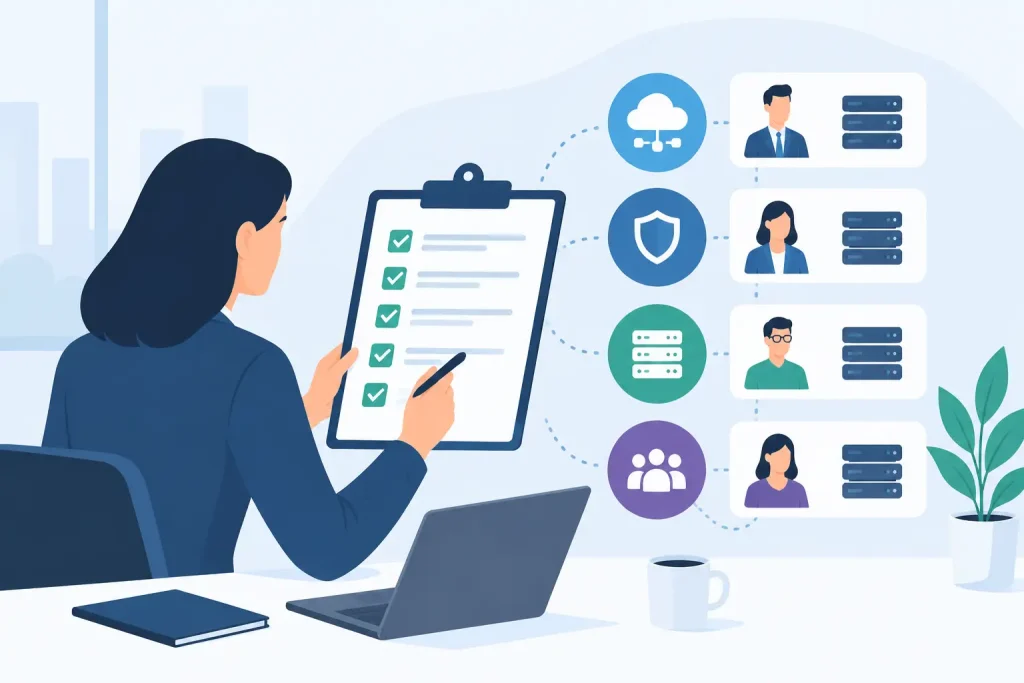
Titles are not enough. The plan should identify the incident lead, technical containment owners, executive decision-maker, legal contact, communications lead, and any outside partners with defined responsibilities. If your internal IT manager is unavailable, there should be a backup with authority to act.
This is where many plans become unrealistic. They assume the security engineer, CIO, general counsel, and provider contacts are all reachable and aligned at the same time. Real incidents happen on weekends, holidays, and during staffing gaps. Build for that reality.
Systems and business priorities
Not every asset has the same value. Your plan should identify critical systems, acceptable downtime thresholds, dependencies, and recovery order. For one organization, that may be EHR access, voice systems, and internet connectivity across clinical locations. For another, it may be payment processing, tenant access systems, and cloud-based line-of-business applications.
This is not only about recovery. It also shapes containment decisions. Shutting down a segment may stop an attacker, but it may also halt operations at multiple sites. Good planning weighs those trade-offs in advance.
How to prepare cybersecurity incident response across the business
The strongest response plans are cross-functional. Security incidents do not stay inside the IT department for long.
Bring operations into the room
Operations leaders understand what cannot go down and for how long. They know where manual workarounds exist and where they do not. They can tell you whether isolating a facility, disabling remote access, or taking a voice platform offline will create a manageable inconvenience or a major service interruption.
Without that input, technical teams often make containment choices that are sound from a security standpoint but damaging from an operational one. The right answer depends on the business context.
Align legal, compliance, and communications early
Some incidents trigger notification obligations, insurance requirements, or regulatory timelines. Others do not. Waiting until after an event to figure out who contacts cyber insurance, when outside counsel gets involved, or how customer communications are approved creates unnecessary exposure.
This matters especially in regulated environments. Evidence handling, breach determination, and public statements need discipline. A rushed email written from incomplete information can create more damage than the initial event.
Include vendors, providers, and managed partners
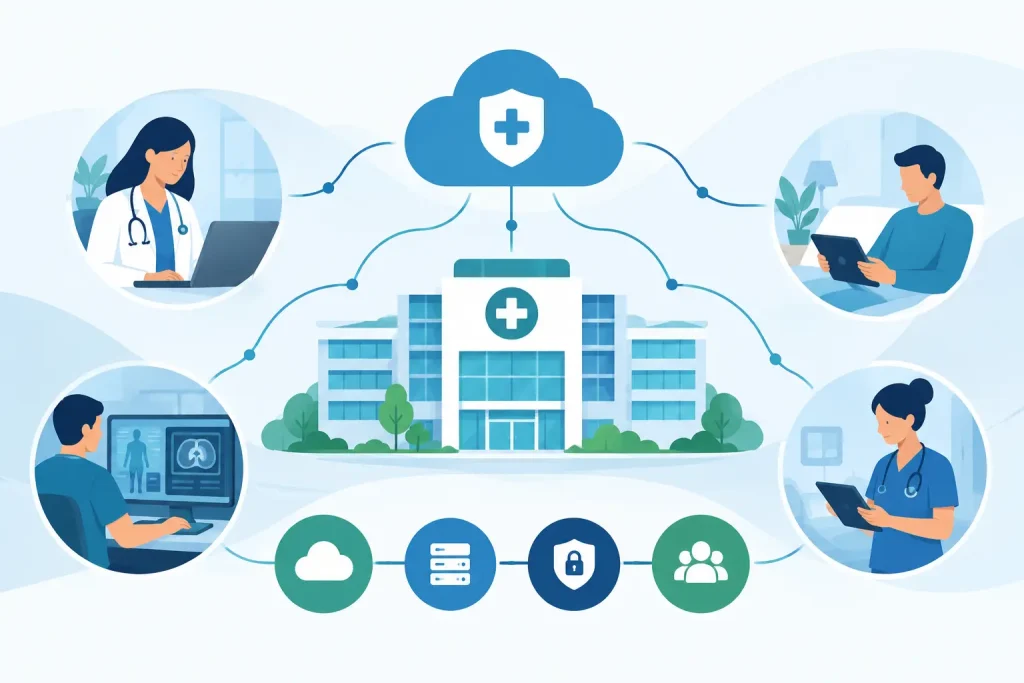
Modern infrastructure is interconnected. Internet circuits, voice systems, cloud platforms, managed endpoints, identity providers, and physical sites all play a role in response. If those relationships are fragmented, document exactly who does what.
A practical incident response program should answer basic questions clearly. Who can disable a compromised circuit failover path? Who has administrative control over firewall rules? Who can pull logs from the voice environment? Who coordinates support if an attack affects multiple locations at once?
This is one reason organizations increasingly prefer one team that owns the whole stack. During an incident, fewer handoffs usually mean faster containment and clearer accountability.
Build the plan around real scenarios
Generic plans break down because they do not reflect how your environment actually fails. Scenario-based planning is more useful.
Start with the incidents most likely to affect your business: phishing-driven account takeover, ransomware on endpoints, business email compromise, denial of service against internet-facing services, vendor-related compromise, and unauthorized access through remote tools. For distributed organizations, include site-level outages that may be security-related but first appear as network or system failure.
Then walk through each scenario. How is it detected? Who confirms severity? What systems get isolated first? What does the business do if a key application is unavailable for four hours? What if the event spans multiple locations? What if backups are present but not immediately recoverable?
These exercises often reveal uncomfortable gaps. Maybe executive contact trees are outdated. Maybe a third-party provider has no after-hours escalation path. Maybe critical credentials are stored in a way that becomes inaccessible during a lockout event. Finding that on paper is far cheaper than finding it during an attack.
Testing matters more than documentation
A plan that has never been tested is an assumption, not a capability. Tabletop exercises are the fastest way to expose weak spots in process, communication, and ownership.
The goal is not to run a theatrical war game. It is to pressure-test decisions. Present a realistic scenario, limit the available information, and force teams to work through actual steps. Who authorizes shutdowns? How are site leaders notified? What happens if the primary IT contact is unreachable? How quickly can logs, backups, and vendor escalations be accessed?
Testing should also include the ugly details. Call trees fail. People misunderstand incident severity. Business leaders ask for certainty before technical teams can provide it. Those friction points are normal. The point is to work through them before a real event.
If you use a managed provider, require participation. A partner that handles cybersecurity, infrastructure, connectivity, and support should be able to show exactly how response coordination works when systems, circuits, users, and sites are all affected. That operational clarity is part of the service, not an extra.
Common mistakes that slow response
The most common problem is overcomplication. Teams create plans that read well in a policy review but are unusable during a live incident. Keep the core workflow simple: detect, classify, contain, communicate, recover, document.
Another mistake is assuming backups solve the whole issue. Backups are critical, but recovery depends on integrity, recovery time, access, application dependencies, and network readiness. If identity systems are compromised or the network is unstable, restore operations may take longer than expected.
The third issue is weak ownership. Shared responsibility sounds workable until something breaks. If multiple vendors support your environment, someone still needs to coordinate the response end to end. That is where organizations get stuck in finger-pointing while the incident keeps moving.
Prepare cybersecurity incident response as an operating discipline
The right goal is not to predict every attack. It is to create a repeatable response capability that stands up under pressure. That means current contacts, defined authority, tested workflows, prioritized systems, and partners who know their role before the phone rings.
For organizations with multiple locations, regulated operations, or limited internal bandwidth, that usually requires more than a document. It requires engineering discipline, operational oversight, and one accountable path through IT, connectivity, security, and recovery. Southeast Networks works with businesses that need that kind of ownership because incidents do not respect vendor boundaries.
If your team had to make isolation, communication, and recovery decisions tonight, the real question is simple: would you be debating the plan, or executing it?