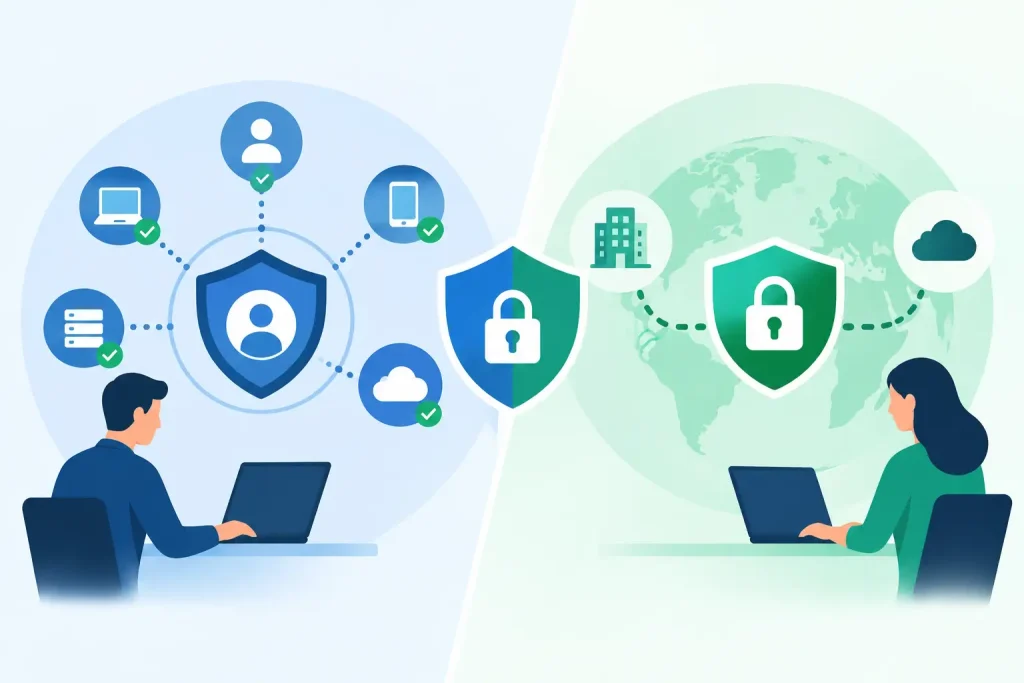

A security incident rarely begins with a dramatic breach alert. More often, it starts with an unpatched firewall, an inactive former employee account, a wireless network configured years ago, or a carrier outage that leaves a location without a reliable way to operate. This managed cyber risk guide is built for leaders who need to protect business continuity without adding another disconnected vendor relationship to manage.
Cyber risk is not limited to the IT department. It affects patient care, resident safety, retail transactions, financial data, classroom operations, tenant experience, and the ability to serve customers at every site. The objective is not to eliminate every possible risk. It is to identify what can disrupt the organization, reduce the likelihood and impact of that disruption, and establish clear ownership when something goes wrong.
What Managed Cyber Risk Actually Covers
Managed cyber risk is the ongoing process of identifying, prioritizing, and reducing technology-related exposure with accountable operational support behind it. It combines security controls with the people, processes, connectivity, and recovery capabilities required to keep the organization functioning.
That distinction matters. A security product can generate alerts, but it cannot automatically resolve a disagreement between an Internet provider, firewall vendor, voice system provider, and IT support company. During an outage or active security event, fragmented responsibility creates delay. A managed approach should give the business one team that can see the environment, coordinate the response, and own the outcome across the stack.
For a multi-site organization, the scope often includes endpoints, user identities, email, Wi-Fi, network segmentation, firewalls, Internet circuits, voice services, backups, cloud applications, and disaster recovery procedures. The exact mix depends on the organization, but the operating principle remains the same: security decisions must account for how work actually gets done.
Start With Business Impact, Not a Tool List
The wrong starting point is a shopping list of security tools. The right starting point is understanding which systems, locations, and workflows create material operational risk.
A senior living community may prioritize clinical documentation, resident communications, building access, and reliable connectivity for care teams. A retail operator may focus on payment systems, point-of-sale uptime, guest Wi-Fi separation, and rapid support across stores. A financial institution may place greater emphasis on identity controls, audit evidence, data protection, and incident response. Each organization needs layered protection, but its risk decisions should reflect its own operational reality.
Begin by identifying the systems that cannot be unavailable for more than a defined period. Then document the dependencies behind them. A cloud application may depend on local Wi-Fi, a stable carrier circuit, secure DNS, user authentication, and properly maintained endpoints. If any dependency fails, the business process fails.
This exercise also exposes concentration risk. If one Internet connection supports phones, payment processing, cloud access, cameras, and guest services, an outage affects far more than employee email. Redundant connectivity may be a business continuity requirement, not an optional upgrade.
Ask Questions That Expose Real Exposure
Leadership teams should be able to get direct answers to a few practical questions. Which locations have single points of failure? Which users have administrative access? Are former employees removed promptly? Which systems hold sensitive information? Can critical services continue if a site loses connectivity? How recently has recovery been tested?
If those answers require several vendors, spreadsheets, or assumptions, the organization has an accountability problem as well as a security problem.
Build Controls in Layers
No single control stops every threat. Effective managed cyber risk programs use overlapping layers so one missed patch, stolen password, or failed connection does not become a full business interruption.
At the user level, identity and access controls matter first. Multifactor authentication, role-based access, prompt account removal, and careful management of privileged accounts reduce the damage a compromised credential can cause. Training also has a place, but it should support technical controls rather than substitute for them. Employees will occasionally make mistakes. The environment should be designed to limit the consequences.
At the endpoint level, managed patching, endpoint protection, device encryption, and centralized monitoring provide visibility into laptops, desktops, servers, and mobile devices. Unmanaged devices are a common blind spot, particularly in distributed organizations where local teams may purchase or configure equipment outside standard processes.
At the network level, properly configured firewalls, segmented networks, secure Wi-Fi, and monitored connectivity reduce lateral movement and prevent avoidable exposure. Separating guest, operational, voice, IoT, and corporate traffic is especially important where cameras, access control, medical devices, payment systems, or building technology share the same environment.
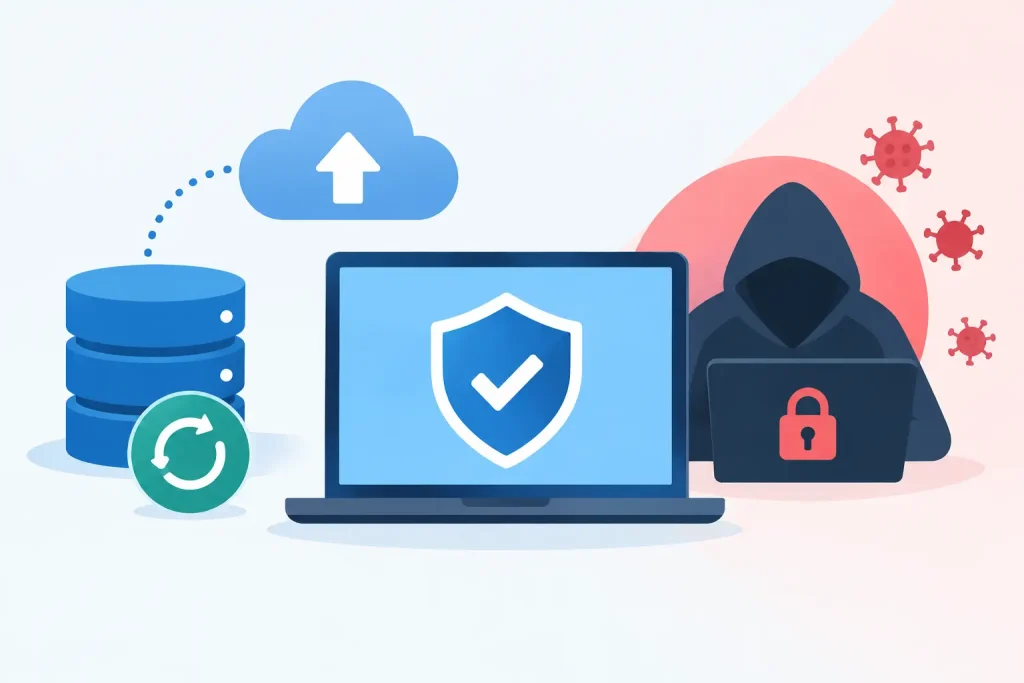
At the data and recovery level, backups must be protected, monitored, and tested. A backup that cannot be restored during an incident is not a recovery strategy. Recovery objectives should be defined in business terms: how much data loss is acceptable, and how quickly must each critical system return to service?
Treat Connectivity as a Security and Continuity Control
Internet service is often managed separately from cybersecurity, even though the two are tightly connected. A secure application is of little use if the site cannot reach it. Likewise, a reliable circuit without properly managed edge security can expose the entire network.
A managed risk program should account for circuit diversity, failover behavior, firewall configuration, cellular backup where appropriate, and the monitoring required to distinguish a carrier failure from an internal network issue. The trade-off is cost versus consequence. Not every site needs identical redundancy, but every site should have a decision that matches the cost of downtime.
Carrier-neutral sourcing can be valuable here because it allows the connectivity design to follow the site’s requirements rather than a single provider’s footprint. For organizations with multiple locations, standardizing the design and escalation process also reduces the burden on local staff when problems occur.
Define Ownership Before an Incident
Technology environments fail in predictable ways when responsibility is unclear. One provider manages the firewall, another owns the circuit, a third supports user devices, and an internal employee is expected to coordinate everyone during an outage. That model can work until the moment it matters most.
Managed cyber risk requires an agreed operating model. The business should know who monitors alerts, who approves security changes, who contacts carriers, who communicates with leadership, who engages insurance or legal resources when necessary, and who leads recovery. Those roles should be documented before an incident, not negotiated during one.
Service commitments also matter. Response time, escalation paths, after-hours coverage, and reporting cadence should be measurable. Real engineers, not a 1-800 black hole, make a material difference when a critical location is offline or a security event is developing.
Measure Risk as an Operating Discipline
Risk management should not disappear into a quarterly report. Leaders need concise, useful evidence that the environment is being maintained. That may include patch compliance, multifactor authentication adoption, backup success and recovery test results, endpoint coverage, unresolved vulnerabilities, carrier performance, incident trends, and open remediation items.
The goal is not to flood executives with technical detail. It is to show whether critical controls are working, where exceptions exist, and what decisions require leadership attention. A location that cannot support redundant connectivity, for example, may need a documented acceptance of downtime risk and a practical recovery plan.
Regular reviews are also the right place to align security investments with growth. A new facility, acquisition, cloud migration, or expansion of remote work changes the risk profile. Treating cyber risk as a fixed annual project leaves the organization behind its own operations.
When a Managed Model Makes Sense
A fully managed model is not the only answer for every organization. A large enterprise with deep internal security, network, and infrastructure teams may choose to retain more direct control. Even then, outside support can be useful for carrier management, 24/7 monitoring, specialized assessments, or surge capacity during an incident.
For organizations with lean IT teams, multiple sites, regulated operations, or a history of vendor finger-pointing, a managed model is often more practical. It reduces the number of handoffs between providers and gives leadership a clearer path to accountability. Southeast Networks approaches this as an integrated operational responsibility: IT, network, connectivity, voice, security, and recovery should work as one managed environment, not as isolated contracts.
The useful next step is not to buy more tools. It is to map the services your organization cannot afford to lose, identify the dependencies behind them, and assign one accountable owner to every gap. That is where cyber risk becomes manageable and business continuity becomes credible.