
A circuit can look excellent on a quote and still become the weak point in your operation. When comparing fiber versus cable internet, the practical question is not which service advertises the largest download number. It is which connection can support your users, cloud systems, customer transactions, voice platform, security tools, and recovery plan when demand rises or something fails.
For a small office with light cloud use, cable may be a responsible choice. For a multi-site healthcare group, senior living community, financial institution, or retail operator, the requirements are usually different. A few minutes of degraded connectivity can interrupt check-in, payment processing, guest services, clinical workflows, remote support, and communications. The right answer depends on the operational role the circuit must play.
How Fiber and Cable Internet Are Built
Fiber internet transmits data through strands of glass using light. In business environments, it is commonly delivered as dedicated internet access, business fiber broadband, or a fiber Ethernet service. The service type matters as much as the underlying fiber. A dedicated circuit generally has defined bandwidth, a service-level agreement, and clearer carrier accountability.
Cable internet uses the coaxial network originally built for television distribution, often with fiber feeding the neighborhood or local node. It can deliver strong download speeds at a lower monthly cost, especially where cable infrastructure is already present. But the last-mile segment is typically shared with nearby users, and performance can vary more during periods of high local demand.
Neither technology is automatically good or bad. The distinction is about consistency, upload capacity, repair expectations, and how much uncertainty your business can absorb.
Fiber Versus Cable Internet: The Business Differences
Speed is only one part of capacity
Cable plans often advertise impressive download speeds. That can work well for browsing, streaming, routine SaaS use, and organizations where most traffic flows into the location. The limitation is usually upload capacity. Cable service is often asymmetrical, meaning download speeds are substantially higher than upload speeds.
Fiber is frequently symmetrical, providing the same upload and download bandwidth. That difference becomes material when staff are moving large files to cloud platforms, running video meetings, supporting remote users, backing up systems off-site, transmitting surveillance footage, or operating hosted voice services.
A 1 Gbps cable plan and a 1 Gbps fiber circuit are not necessarily equal services. Ask whether the stated bandwidth is symmetrical, whether it is shared, and what throughput is expected during busy periods. Those answers are more useful than the headline speed alone.
Reliability is tied to the service design
A well-designed fiber service generally provides more stable performance and less sensitivity to neighborhood congestion. Dedicated fiber can also come with defined uptime targets, restoration commitments, and a formal escalation path. For organizations with a real cost of downtime, those commitments matter.
Cable can be reliable in many markets, but it is more often delivered as a best-effort service. An outage may be handled through a residential or general business support model, even when the circuit supports a commercial location. That does not mean the provider will not respond. It means the service agreement may not define the same repair timeline or credit structure as an enterprise circuit.
The key distinction is accountability. If a location loses connectivity at 8:00 a.m., who owns carrier escalation, verifies the root cause, communicates status, and confirms that applications have recovered? A circuit is only one component of that response.
Latency and jitter affect real-time operations
Latency is the time it takes data to travel from one point to another. Jitter is variation in that timing. Both matter for VoIP calls, video conferencing, virtual desktops, cloud applications, payment systems, and remote access.
Fiber typically delivers lower and more consistent latency than cable, particularly when delivered as a dedicated service. Cable can still support voice and video effectively, but local congestion or signal issues may introduce variability. Users experience that as choppy calls, delayed application screens, frozen video, or intermittent VPN performance.
For an organization that runs a cloud phone system, consistency matters more than an occasional speed test result. A fast connection with unpredictable jitter can create a poor customer experience.
Scalability favors fiber, but availability decides the project
Fiber is often the better long-term platform when an organization expects growth. Bandwidth can frequently be increased without changing the physical service path, assuming the local network equipment can support the upgrade. This is valuable for expanding campuses, new tenants, growing user counts, increased camera coverage, and heavier reliance on cloud applications.
Cable may be faster to install and considerably less expensive where fiber construction is not available. In some buildings, that makes it the practical primary connection while a fiber build is evaluated. Installation timelines should be assessed early. Extending fiber to a site may require engineering, permits, easements, construction, and building coordination.
A lower-cost connection that can be installed quickly has value. It simply should not be assigned a mission-critical role without understanding its limits.
Cost Should Be Measured Against Downtime
Cable usually wins on monthly price. Fiber, especially dedicated fiber, generally costs more because the service includes higher-grade infrastructure, committed bandwidth, service-level terms, and enterprise support expectations. The mistake is treating the monthly circuit charge as the full financial comparison.
Consider what a connectivity event costs the business. For a retail location, that may include lost transactions and frustrated customers. For a healthcare or senior living facility, it may disrupt communications, documentation, monitoring, or guest access. For a multi-site operator, an outage can also consume internal IT time as teams work across carriers, hardware vendors, and application providers.
A business should calculate both the cost of the connection and the cost of being without it. In many cases, the right design is not fiber or cable. It is fiber as the primary circuit with cable, fixed wireless, or a second diverse fiber path as backup.
Choose the Circuit Based on the Location’s Role
A practical decision starts with the business function of each site. A headquarters, data-intensive facility, call center, clinical site, or distribution location normally deserves stronger service assurances than a lightly used satellite office. Standardizing every location on the most expensive circuit can waste budget. Standardizing every location on the cheapest circuit can create avoidable risk.
Use these questions to guide the decision:
- Does the site depend on cloud voice, payment processing, remote support, cameras, or line-of-business applications?
- How much upload traffic does the location generate during normal and peak operations?
- What is the acceptable outage duration before revenue, safety, compliance, or customer service is affected?
- Is the circuit backed by a meaningful service-level agreement and a known escalation process?
- Does the building have more than one physically diverse carrier path available?
For many organizations, a branch office may operate effectively on cable with managed failover. A flagship site may require dedicated fiber, an actively monitored secondary circuit, and automatic failover configured at the firewall or SD-WAN edge. The design should follow operational risk, not a blanket preference for one technology.
The Network Behind the Circuit Still Matters
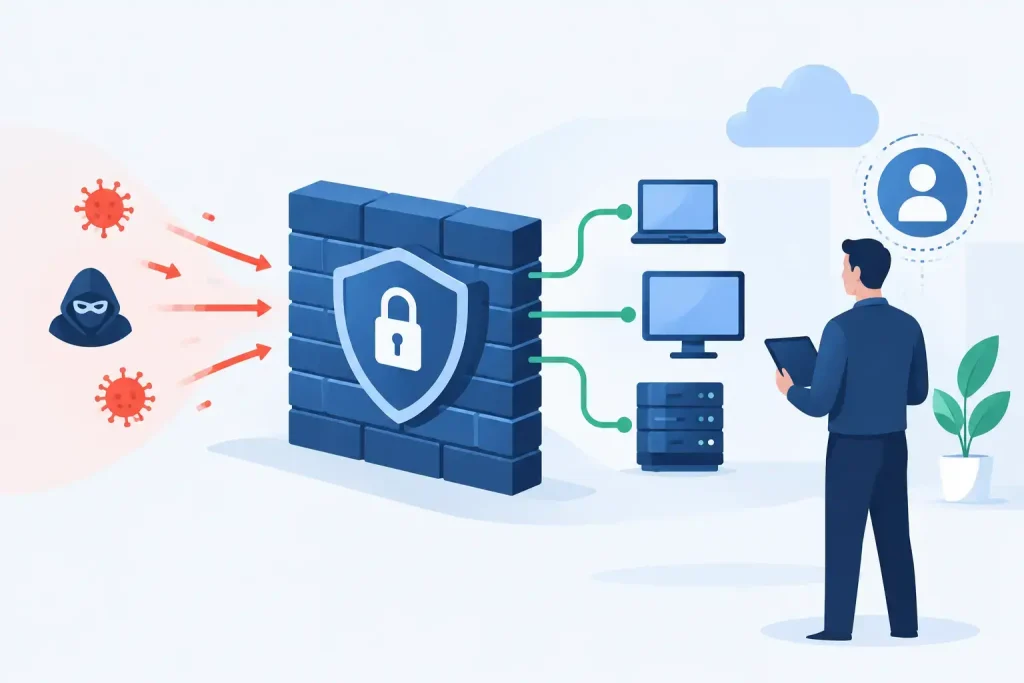
Selecting fiber does not correct weak Wi-Fi, undersized firewalls, poor VLAN design, aging switches, or unmanaged endpoints. Selecting cable does not guarantee poor performance if the internal network is properly engineered and the workload is appropriate. Users judge the complete experience, not the carrier handoff.
That is why connectivity should be assessed with the rest of the environment. Review application traffic, voice quality requirements, security inspection, wireless coverage, backup policies, and failover behavior. Test what happens when the primary circuit fails. Confirm whether phones, VPN users, payment terminals, and critical cloud applications continue to operate as expected.
Southeast Networks approaches connectivity as part of that complete operating model: one team that can source carrier options, design the network edge, manage the equipment, and own escalation when service is disrupted. That reduces the vendor handoffs that turn a simple outage into a long troubleshooting exercise.
The best circuit is the one that matches the consequences of failure at that location. Put fiber where performance, scale, and recovery commitments are essential. Use cable where its economics and availability fit the workload. Then make sure the network, failover plan, and support ownership are ready for the moment the primary connection is not.