
A server outage at 2:00 a.m., a failed Internet circuit at a retail location, or a phishing incident affecting a healthcare team does not wait for the next business day. That is the real decision behind managed IT vs in house: not simply who handles tickets, but who is accountable when technology interrupts operations.
For organizations with multiple sites, compliance obligations, or a low tolerance for downtime, the answer is rarely as simple as outsourcing everything or hiring more internal staff. The right model depends on the complexity of the environment, the business impact of disruption, and whether technology leadership has the capacity to oversee the full stack.
Managed IT vs In-House: The Core Difference
An in-house IT model places responsibility for systems, users, vendors, security, and projects on internal employees. That team may be highly capable, deeply familiar with the organization, and well positioned to support specialized applications or business workflows. In-house IT can provide direct access and institutional knowledge that are difficult to replace.
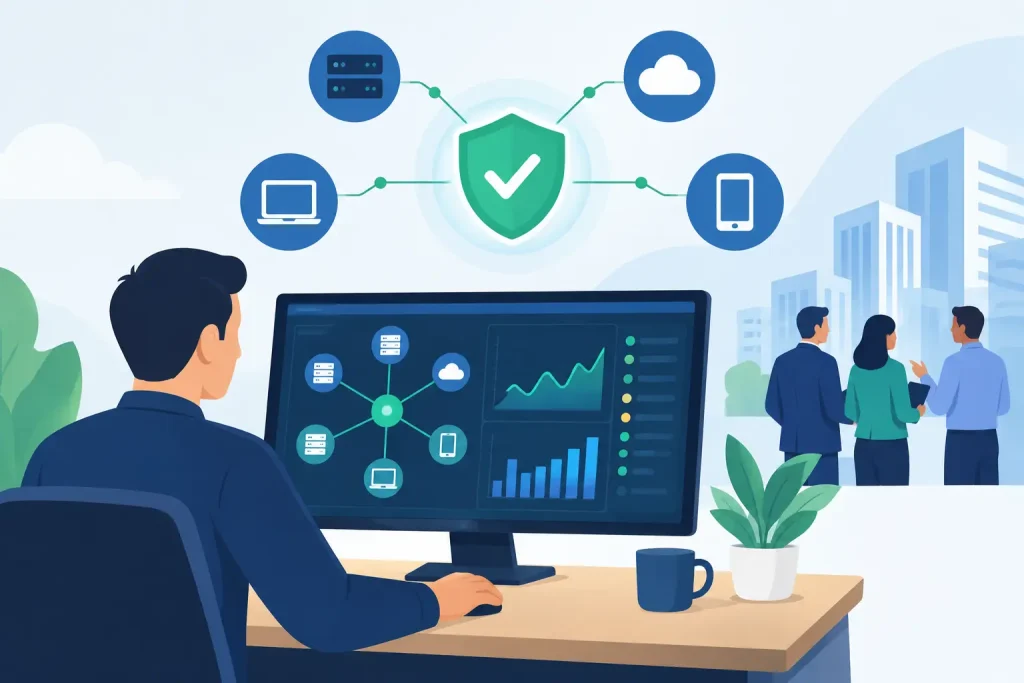
Managed IT shifts some or all of that responsibility to a technology partner. The provider supplies defined services such as help desk support, endpoint management, cybersecurity monitoring, network administration, backup oversight, strategic planning, or full infrastructure management. A strong managed services relationship is not just an external ticket desk. It is an operating model with documented responsibilities, response commitments, reporting, and clear ownership.
The practical difference is coverage. A two-person internal team may know the environment better than anyone, but it cannot be available around the clock, maintain expertise across every discipline, manage carrier escalations, and complete major projects without trade-offs. Managed IT is designed to add depth, repeatable processes, and coverage beyond the capacity of a small internal department.
Cost Is More Than Salary and Monthly Fees
Many organizations begin the managed IT vs in-house conversation with a simple comparison: payroll versus a monthly managed services fee. That comparison is incomplete.
The cost of an internal team includes salaries, benefits, recruiting, training, on-call compensation, management time, tools, security platforms, replacement coverage, and turnover risk. Finding one experienced network engineer, security specialist, or systems administrator can take months. Retaining all of those skills in a single organization is even harder, particularly when IT is not the company’s primary business.
Managed IT typically converts much of that variability into a predictable operating expense. The monthly cost is easier to budget, but the larger value is often the ability to avoid unplanned costs: emergency consulting, extended outages, rushed equipment purchases, compliance remediation, or a security event that spreads because no one was watching after hours.
That does not mean managed IT is automatically less expensive. An organization with a mature internal IT department, a stable environment, and highly specialized technology may gain little from fully outsourcing. In those cases, co-managed IT can be the better financial decision. Internal staff retain control of strategic systems while the managed provider covers monitoring, security operations, help desk overflow, networking, projects, or after-hours support.
Coverage and Response Matter More Than Headcount
A capable internal IT manager can solve difficult problems. The challenge is that modern environments create too many simultaneous demands for one person or a small team to manage well. User support, patching, cloud administration, Wi-Fi performance, vendor coordination, cybersecurity alerts, lifecycle planning, and business projects all compete for the same hours.
When a location loses connectivity, the issue may involve the firewall, local switching, wireless equipment, carrier circuit, voice platform, or a construction-related damage event. If each component belongs to a different vendor, internal staff can spend hours acting as the coordinator between providers. Meanwhile, operations are waiting for a resolution.
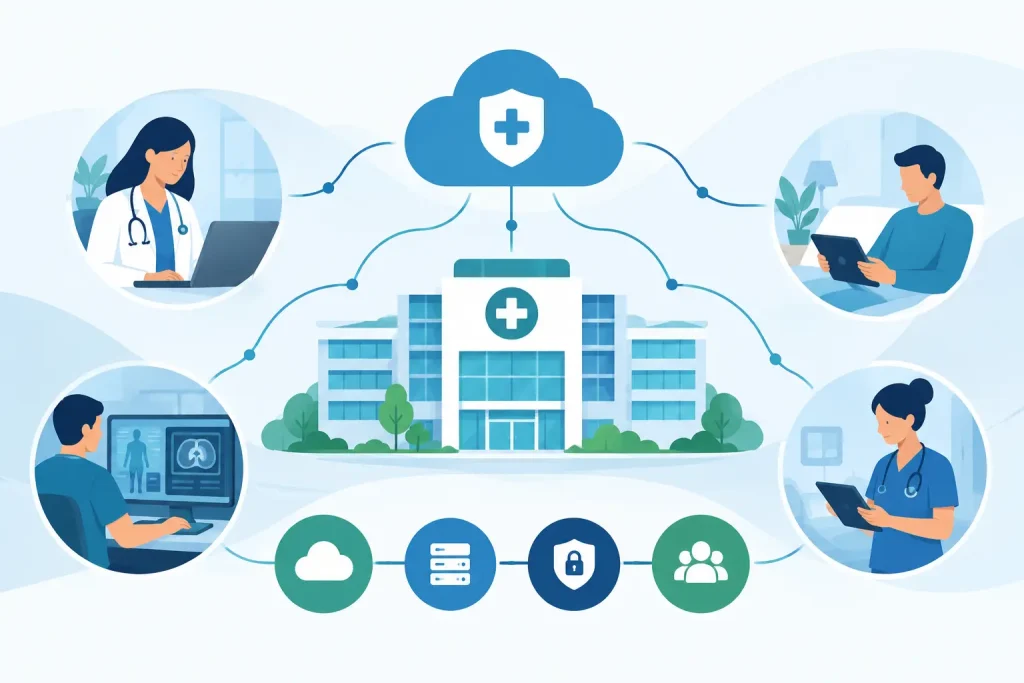
A managed provider with IT, network, voice, and carrier expertise can reduce that friction. One team owns the troubleshooting process across the stack, escalates the right parties, and remains accountable until service is restored. This is especially valuable for senior living communities, healthcare organizations, multi-site retail, financial institutions, and education environments where a connection problem can affect safety, revenue, communications, or access to essential systems.
The question is not whether internal staff can fix the issue eventually. It is whether the organization has dependable coverage and a clear escalation path when the issue occurs at the worst possible time.
Security Requires Specialized, Continuous Attention
Cybersecurity is one of the clearest reasons organizations reconsider an entirely in-house model. Security is no longer a set of annual tasks or a firewall installed at the edge. It requires ongoing patch management, endpoint protection, identity controls, email security, backup verification, monitoring, vulnerability remediation, user awareness, and incident response planning.
An internal IT team may handle these functions well, but only if it has the time, tools, and specialized knowledge to operate them consistently. Security work is easy to defer when urgent tickets and projects fill the day. Attackers benefit from that gap.
Managed IT can bring a disciplined security baseline to the environment. The value is not just more tools. It is a consistent process for reviewing alerts, applying updates, documenting controls, testing backups, and identifying risks before they become operational failures. For regulated organizations, that process also supports audit readiness and clearer evidence of how systems are being protected.
Still, not every security responsibility should leave the organization. Leadership must remain involved in risk decisions, access approvals, policy enforcement, and incident communications. A provider can operate controls, but business leaders must define what risk is acceptable and what continuity requirements the organization expects.
Vendor Management Is an Often-Hidden Cost
Technology environments become fragmented quickly. One vendor supports the firewall, another provides Internet, another manages voice, another handles endpoint security, and another is called when the server has a problem. Every vendor may be competent, yet no one owns the business outcome.
That fragmentation creates a familiar failure pattern: each provider identifies another component as the cause, and the customer is left to coordinate the investigation. It also makes billing harder to understand and technology planning harder to control across locations.
A single-source managed partner does not eliminate every external vendor, especially when carrier services or specialized applications are involved. It should, however, provide one accountable point of contact and a documented responsibility model. The provider should know which circuits serve each site, which equipment depends on them, what the failover plan is, and who to engage when performance degrades.
For growth-oriented organizations, this becomes more valuable with every new location. Standardized deployments, repeatable security controls, centralized visibility, and consistent support processes prevent each site from becoming its own technology exception.
When In-House IT Is the Better Choice
Internal IT is often the right primary model when technology is tightly connected to proprietary operations, product development, or highly specialized applications. Organizations with large IT departments may need dedicated employees who understand unique workflows, can sit with operational teams, and can make rapid decisions without an external approval process.
It is also a strong choice when leadership has already invested in the people, systems, governance, and after-hours coverage needed to manage the environment effectively. The key is honesty about capacity. If the internal team is constantly reacting, postponing infrastructure work, or depending on one person who knows how everything works, the model is under strain even if ticket queues are being cleared.
A fully internal approach works best when it is intentional, staffed for resilience, and supported by documented processes. It becomes risky when it relies on individual heroics.
The Case for a Co-Managed Model
For many organizations, the best answer is not managed IT or in-house IT. It is a deliberate combination of both.
A co-managed model allows internal staff to remain close to users, business applications, and strategic initiatives while an external team supplies additional engineering depth. The managed provider may take responsibility for 24/7 monitoring, cybersecurity tools, network operations, backup management, carrier coordination, project execution, or help desk escalation. Internal leadership maintains visibility and control without carrying every operational burden alone.
This structure is particularly effective during growth, mergers, facility expansions, or periods when an IT department needs to modernize without pausing daily support. It also reduces key-person risk by ensuring that network diagrams, credentials, configurations, and recovery procedures are documented outside a single employee’s memory.
The relationship only works when roles are precise. Define who owns user support, vendor communication, change approvals, security decisions, equipment procurement, and incident response. Ambiguity creates the same gaps that outsourcing was intended to solve.
How to Make the Decision
Start with operational requirements, not a preference for a staffing model. Review how much downtime each location can tolerate, which systems are business-critical, what security and compliance obligations apply, and how quickly the organization expects support issues to be resolved.
Then assess the current state with clear eyes. Are backups tested? Is network documentation current? Can the organization support an outage after hours? Does anyone own carrier escalation from start to finish? Can the internal team complete strategic projects without leaving security and maintenance behind?
The strongest technology model is the one that gives leadership confidence in the answers. Whether that means building internal capabilities, engaging a managed partner such as Southeast Networks, or combining both, the objective is the same: one accountable operating model that keeps the business connected, secure, and ready to grow.
Before choosing a model, test it against the next real disruption. If a circuit fails, a critical employee is unavailable, or a security event begins overnight, everyone should know who owns the response, what happens next, and how operations stay moving.