
A phishing click at 4:47 p.m. can become an outage by 5:12. For organizations with multiple locations, regulated data, and limited internal IT bandwidth, that timeline is not theoretical. It is exactly why managed cybersecurity services have moved from a nice-to-have line item to an operating requirement.
The real issue is not whether threats exist. Every executive team already knows that. The issue is whether your organization has consistent coverage, clear accountability, and the ability to respond before a security event turns into downtime, compliance exposure, or customer impact.
What managed cybersecurity services actually cover
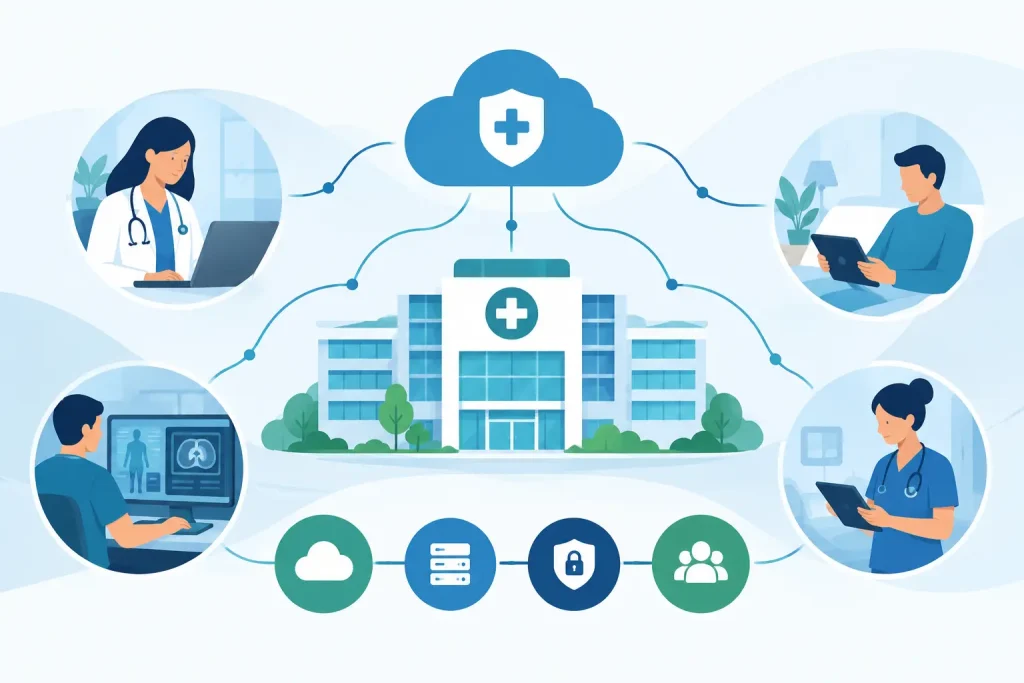
Managed cybersecurity services are ongoing, outsourced security functions delivered by a specialized provider. That can include endpoint protection, email security, firewall management, network monitoring, vulnerability scanning, identity controls, incident response, compliance support, and user awareness training. In stronger operating models, those services are not sold as isolated tools. They are managed as part of the broader environment where users, devices, circuits, wireless networks, cloud applications, and business operations all intersect.
That distinction matters. A stack of disconnected security products does not create security by itself. Someone still has to tune policies, review alerts, investigate anomalies, close gaps, document changes, and coordinate response when something fails. If those responsibilities are split across too many vendors, blind spots appear fast.
For multi-site healthcare, senior living, retail, finance, education, and property operations, the challenge is often less about buying technology and more about owning outcomes. Security incidents rarely stay in one lane. A compromised endpoint can affect voice systems, line-of-business applications, guest networks, remote access, payment workflows, and support operations at the same time.
Why businesses buy managed cybersecurity services
Most organizations do not outsource security because they want fewer decisions. They do it because they need better execution.
Internal IT teams are often stretched across help desk tickets, device lifecycle management, vendor coordination, cloud administration, onboarding, compliance requests, and site support. Security becomes one more critical function competing for attention. That creates uneven monitoring, delayed patching, alert fatigue, and inconsistent documentation.
Managed cybersecurity services help close that gap by adding dedicated security oversight, repeatable processes, and around-the-clock coverage that many internal teams cannot staff economically. They also create a clearer chain of responsibility. When an issue appears, there is less ambiguity about who investigates it, who escalates it, and who owns containment.
There is also a financial reality here. Building a mature internal security operation requires specialized hires, tools, training, retention, and management discipline. That can make sense for very large enterprises. For many growth-oriented organizations, a managed model provides stronger coverage at a more predictable cost.
The accountability problem most providers do not solve
Security vendors often focus on the security stack alone. The problem is that incidents do not respect service boundaries.
If your firewall is managed by one company, your circuits by another, your Wi-Fi by another, your Microsoft environment by another, and your help desk by someone else, every serious event becomes a coordination exercise. Response slows down. Root cause gets harder to isolate. Each provider can point to the next one.
That is where managed cybersecurity services should be evaluated differently. The best fit is not always the provider with the longest feature list. It is often the partner that can see and manage the larger operating environment. When one team understands your endpoints, connectivity, remote access paths, wireless design, voice environment, and recovery plan, response gets faster and decisions get cleaner.
That single-source accountability is especially valuable in organizations where downtime directly affects resident care, patient access, payment processing, tenant experience, classroom continuity, or branch operations. In those settings, security is not separate from infrastructure performance. It is part of it.
What good managed cybersecurity services look like in practice
A capable provider starts with visibility. That means understanding what assets exist, where users connect, which systems are business-critical, how traffic moves between locations, and where sensitive data lives. Without that baseline, security monitoring becomes guesswork.
From there, the provider should build controls around actual business risk. A retail operator may need stronger segmentation for point-of-sale systems and guest Wi-Fi. A senior living group may prioritize endpoint containment, identity protection, and business continuity across communities. A financial organization may place more weight on auditability, change control, and evidence collection.
Good managed cybersecurity services also rely on disciplined operations. Alerts need defined thresholds. Escalations need named paths. Changes need documentation. Exceptions need review. Incident response cannot be improvised during an incident.
Just as important, reporting should be useful to both technical and nontechnical stakeholders. IT managers need detail on detections, patch status, policy changes, and remediation. Operations and finance leaders need to know whether risk is being reduced, whether systems are staying available, and whether the service is performing against expectations.
Where the trade-offs are
Not every organization needs the same depth of service, and not every managed model fits every environment.
Some companies need a fully outsourced security function because they have lean internal teams and multiple sites to support. Others already have internal IT leadership and want a managed partner to provide monitoring, tooling, escalation support, and specialized expertise. Neither approach is wrong. The right model depends on staffing, risk tolerance, compliance exposure, and how much operational complexity the business carries.
There are trade-offs in tool flexibility as well. Some providers standardize heavily, which can improve consistency and response times. Others allow more customization, which may better fit unusual environments but can also introduce complexity. Standardization is usually an advantage unless your operations depend on highly specific workflows or legacy platforms.
Price is another area where buyers need clarity. Lower-cost managed cybersecurity services may cover monitoring but not remediation, policy tuning, after-hours response, or coordination with other infrastructure providers. That pricing can look efficient until a real event happens and every meaningful action falls outside scope.
How to evaluate a provider without getting lost in jargon
Start with operating questions, not product questions. Ask what happens when a user clicks a malicious link after business hours. Ask who contacts your team, who isolates the device, who checks lateral movement, and who documents the event. Ask how firewall changes are approved, how vulnerabilities are prioritized, and how security incidents are coordinated across circuits, wireless, cloud systems, and endpoints.
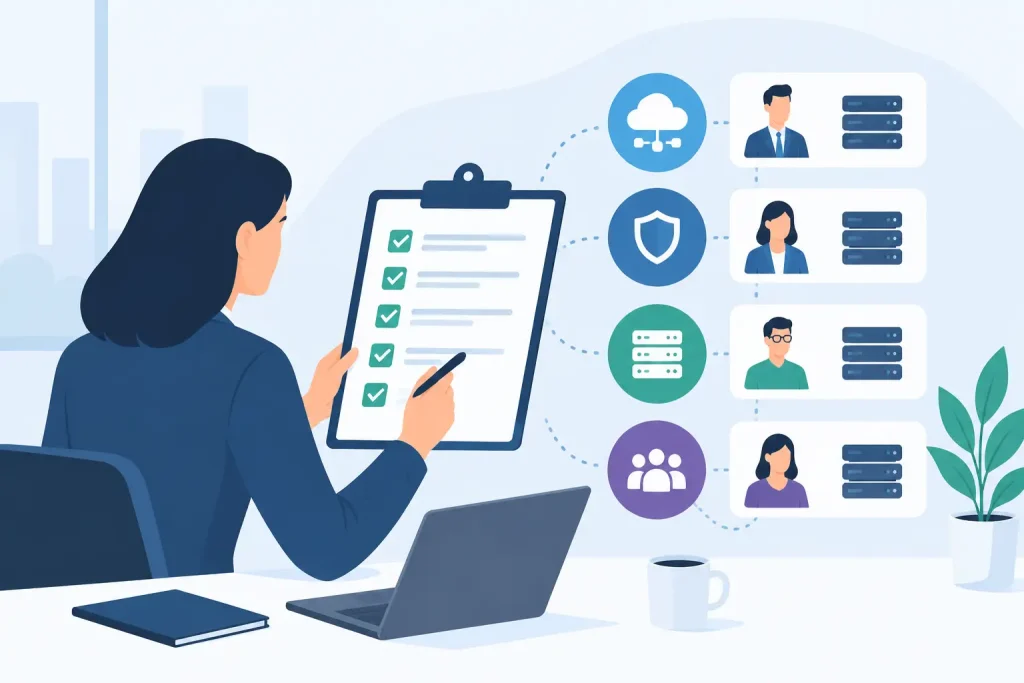
Then look at coverage. A provider should be able to explain how it handles endpoint detection, email threats, identity security, patching alignment, network edge protection, backup awareness, and incident escalation. If those functions sit with different companies, ask how they work together and who has final authority during an outage or breach.
Service accountability matters as much as technical capability. You want real engineers, defined response expectations, and a support structure that does not disappear into a generic call queue. Security is not only about prevention. It is about execution under pressure.
Why integration matters more than another dashboard
Many organizations already have security tools. What they lack is operational cohesion.
A dashboard can tell you that something is wrong. It cannot coordinate branch connectivity, isolate a compromised device, validate backup integrity, address a VPN issue, and restore normal operations across locations. That takes an integrated service model and a provider that owns the result, not just the alert.
This is where a partner like Southeast Networks fits naturally for organizations that need one team to own the whole stack. When cybersecurity, connectivity, network infrastructure, support, and continuity planning are managed together, the business gets fewer handoffs, faster decisions, and a clearer path through incidents that would otherwise drag across multiple vendors.
Managed cybersecurity services as an operating decision
Security buying decisions are often framed as technical purchases. In practice, they are operating decisions.
The question is whether your organization can maintain secure, stable operations when staff are busy, systems are distributed, locations are growing, and threats are constant. Managed cybersecurity services are valuable when they reduce noise, tighten accountability, and keep the business running through problems that would otherwise create costly disruption.
If a provider cannot explain how it protects uptime, coordinates response, and fits into the rest of your environment, it is probably selling tools, not managed security. The organizations that get the most value are the ones that choose a partner prepared to own both the risk and the response. That is usually the difference between having security products and having security that holds up when the day goes sideways.
The best next step is not a bigger stack. It is a clearer operating model with named responsibility, measured performance, and a partner that treats cybersecurity as part of business continuity, not a separate conversation.