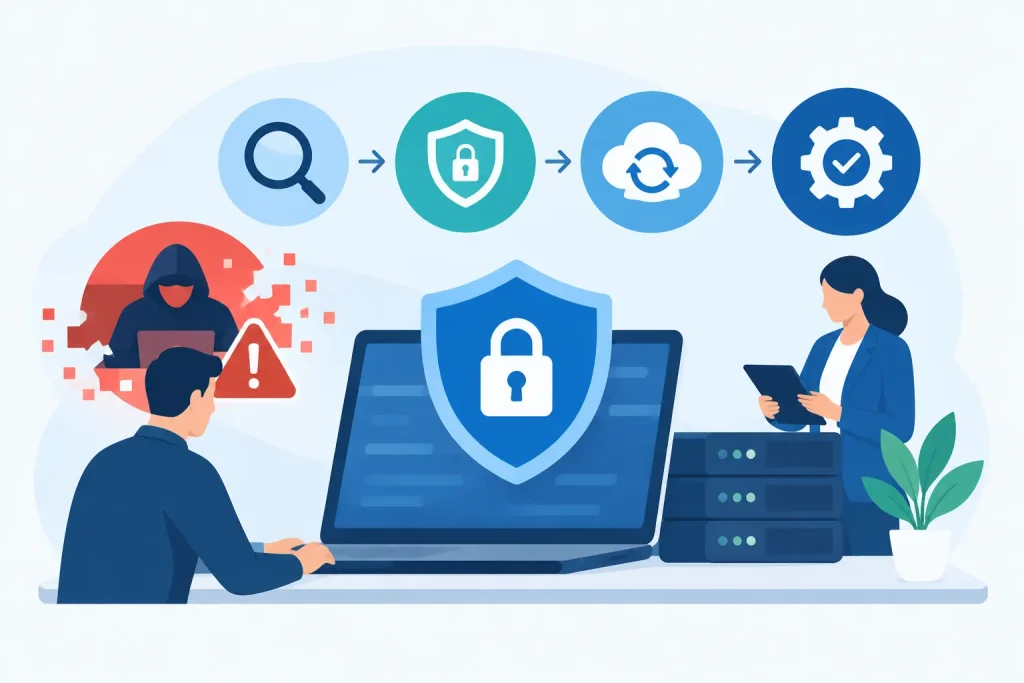

A 20-minute Internet outage does not stay an IT problem for long. It becomes a missed patient appointment, a stalled point-of-sale transaction, a resident unable to reach staff, a classroom without access, or a finance team working around a system they cannot trust. The most meaningful IT outsourcing benefits are not about moving tickets off an internal team’s desk. They are about protecting operations when technology is under pressure.
For organizations with multiple locations, regulated data, lean internal teams, or little tolerance for downtime, outsourcing can replace fragmented ownership with accountable execution. That result depends on the partner and the operating model. Handing work to a generic help desk is not the same as working with a team that understands your network, carrier circuits, endpoints, voice systems, security controls, and recovery requirements.
1. IT outsourcing benefits start with clearer accountability
Many technology failures become prolonged business disruptions because too many vendors are involved. The Internet carrier blames the firewall. The firewall provider points to the local network. The application vendor says the infrastructure is outside its scope. Meanwhile, the operations team is left coordinating updates and trying to restore service.
A properly structured managed services relationship changes that dynamic. One team takes responsibility for triage, escalation, communication, and resolution across the technology environment. The provider may not own every underlying product, but it should own the process and the outcome.
That distinction matters most when a site is down. Decision-makers need a clear answer to three questions: who is working the issue, what is the business impact, and when will the next update arrive? Accountability turns those questions from a scramble into an operating standard.
2. Better uptime through proactive monitoring and response
Internal IT teams are often capable but stretched. They may spend their day onboarding employees, supporting applications, managing projects, and responding to immediate user requests. Continuous monitoring of connectivity, device health, backup status, security events, and network performance can become reactive by necessity.
Outsourced IT support gives organizations access to monitoring and response coverage built for that job. The value is not simply receiving alerts. It is having engineers who can distinguish between a brief performance fluctuation and a condition that could take down a site, then act before staff or customers are affected.
For a senior living community, that may mean identifying a failing network component before it disrupts clinical workflows or resident communications. For a retailer, it may mean isolating a Wi-Fi or circuit issue before a peak sales period. For a commercial property operator, it may mean resolving connectivity degradation before tenants begin opening tickets.
Uptime is rarely the result of one technology purchase. It comes from disciplined monitoring, documented escalation paths, tested failover, and people who know the environment well enough to respond quickly.
3. Access to deeper expertise without building every role in-house
A modern technology stack is broader than most organizations expect. It can include endpoint management, identity controls, Wi-Fi design, managed switching, firewall policies, voice systems, cloud applications, carrier contracts, backup platforms, incident response, and compliance requirements. Finding one internal hire who is equally strong across all of those domains is unlikely.
Outsourcing gives a business access to a broader engineering bench without carrying the full cost of specialized full-time roles. That can be especially valuable for organizations with a small internal IT department. Rather than replacing internal staff, the right partner can extend their capacity and give them a dependable escalation path for infrastructure, security, and carrier-related issues.
There is a trade-off. External engineers cannot operate effectively on assumptions or incomplete documentation. A provider needs time to learn the environment, map dependencies, and establish standards. Organizations should expect an initial assessment and onboarding process, not instant familiarity on day one.
4. More predictable technology spending
Unplanned IT costs create friction between operations, finance, and leadership. Emergency hardware replacements, after-hours repair work, inconsistent support invoices, and poorly understood carrier charges make it difficult to forecast spend. They also make it harder to determine whether technology investments are solving the right problem.
Managed IT services can move a significant portion of support and oversight into a predictable monthly operating expense. Predictability does not mean every cost disappears. Hardware refreshes, new locations, acquisitions, and major projects still require planning. It does mean routine management, monitoring, maintenance, and support are no longer governed by the next emergency.
The strongest financial case is not the lowest monthly fee. It is the reduced cost of business interruption, lower vendor-management overhead, fewer avoidable emergency expenses, and a clearer view of what each location requires. For multi-site operators, standardized service levels and billing can also make growth easier to model.
5. Fewer vendors to manage and fewer gaps to chase
Technology fragmentation is expensive in ways that do not always appear on an invoice. Someone must coordinate circuit installs, approve firewall changes, resolve voice quality problems, follow up on security findings, and make sure a new site has working Wi-Fi on opening day. When each responsibility sits with a different company, internal leaders become the integration layer.
One provider that can oversee managed IT, networking, voice, connectivity, cybersecurity, and disaster recovery reduces that burden. Carrier-neutral sourcing is particularly useful because it allows the provider to recommend connectivity based on location, availability, performance, and redundancy needs rather than a single carrier catalog.
This model does not require using one vendor for every technology decision. Some organizations have specialized applications, incumbent security platforms, or contractual obligations that should remain in place. The goal is not forced consolidation. It is clear ownership at the points where systems and vendors intersect.
6. Stronger security through consistent execution
Security risk often grows in the gaps between tools. A firewall may be configured correctly while endpoint patching is inconsistent. Multifactor authentication may be deployed while former employee access is not removed promptly. Backups may run every night but have never been tested for recovery.
Outsourced IT can create discipline around these routine but critical controls. A capable provider establishes standards for patching, access management, endpoint protection, email security, network segmentation, backup verification, and incident response. It also documents exceptions so leadership understands where risk has been accepted rather than merely overlooked.
The benefit is especially relevant in healthcare, financial services, education, and other environments where a security incident can trigger operational disruption, regulatory exposure, and loss of trust. Security services are not a guarantee against every threat. They are a way to reduce preventable exposure and improve the organization’s ability to detect, contain, and recover from an incident.
7. Disaster recovery becomes an operational requirement, not a shelf document
A recovery plan that has not been tested is a set of intentions. Real business continuity requires knowing which systems must return first, where staff will work if a location is unavailable, how communications will continue, and whether backups can actually restore data within the required timeframe.
An outsourced partner can help turn these questions into an executable recovery design. That includes identifying critical systems, setting recovery priorities, validating backup coverage, planning redundant connectivity, and conducting tests that reveal where assumptions fail.
Recovery objectives should be shaped by business impact, not generic templates. A retail operator may prioritize payment systems and store connectivity. A medical office may prioritize patient scheduling, communications, and secure records access. A property management company may focus on building systems, leasing operations, and tenant communications.
8. Faster site openings, expansions, and acquisitions
Growth places stress on technology operations. Every new location requires decisions about circuits, cabling, Wi-Fi coverage, voice, security, user provisioning, equipment staging, and support readiness. If these decisions are made from scratch each time, expansion becomes slower and less consistent.
Outsourcing supports repeatable deployment standards. A provider that understands the organization can build a location playbook, coordinate carrier delivery, stage equipment, and validate service before staff arrive. That creates a more reliable opening process and reduces the chance that a new site begins operations with temporary workarounds that become permanent problems.
Southeast Networks approaches this work as one managed environment: connectivity and IT are planned together because a well-managed endpoint or cloud application still depends on a stable, secure network path.
9. Internal teams can focus on business-specific work
The final benefit is often underestimated. Internal IT leaders bring the most value when they are improving business processes, supporting strategic applications, and aligning technology with operational goals. They should not have to spend every week chasing carrier tickets, resetting routine access issues, or interpreting alerts from tools that no one has time to manage.
Outsourcing routine oversight can give internal teams room to focus on the work that only they can do: understanding users, guiding organizational change, managing specialized applications, and making better technology decisions for the business. The arrangement works best when responsibilities are explicit. Internal staff should know what remains under their control, what the provider owns, and how escalations will work.
Choosing an outsourcing model that delivers the benefit
Not every outsourcing arrangement produces these outcomes. Before selecting a partner, assess whether it can support your locations, service hours, technical environment, compliance needs, and growth plans. Ask how incidents are communicated, who owns carrier escalations, how backup recovery is tested, and whether engineers who understand your environment are available when problems occur.
Also look beyond the proposal. Clear service levels, documented responsibilities, onboarding discipline, and plain-language reporting matter more than an impressive list of tools. Real engineers, not a 1-800 black hole, make a measurable difference when operations are affected.
The right outsourcing relationship should make technology less of a daily management burden and more of a dependable business utility. If your team is still acting as the switchboard between disconnected vendors during an outage, the next practical step is to map ownership across the stack before the next disruption tests it.