
A dropped call at a nurses’ station, a Wi-Fi dead zone in a resident wing, or a failed Internet circuit during patient intake is not a routine IT ticket. It is an operational event. Healthcare technology has to support care delivery at the point of need, protect sensitive information, and keep every location connected when staff and patients cannot wait for a workaround.
For healthcare systems, outpatient clinics, senior living communities, and specialty providers, the challenge is rarely a lack of technology options. The real problem is fragmented ownership. One vendor manages the network, another handles phones, a carrier owns the circuit, and internal staff are left coordinating an outage across teams that do not share accountability.
The better model is to treat technology as essential infrastructure. That means designing the environment around uptime, security, response, and clear ownership across the whole stack.
Healthcare Technology Is an Operations System
Healthcare environments run on connected workflows. Electronic health records, imaging systems, medication platforms, nurse call systems, building access controls, VoIP, guest Wi-Fi, and mobile devices all depend on a network that is stable and properly managed. When the underlying environment is weak, the consequences spread quickly.
A slow connection may delay documentation. Poor wireless coverage can interrupt staff mobility. An unmanaged endpoint may create an entry point for ransomware. A phone outage can prevent a patient from reaching the right department. These issues do not stay confined to the IT department because care teams experience them as lost time, delayed communication, and reduced confidence in the systems they rely on.
That is why infrastructure decisions should not be evaluated only by monthly cost or device specifications. Leaders need to ask whether the technology environment can sustain daily operations, recover from a failure, and expand without creating new points of risk.
The Foundation: Connectivity That Does Not Depend on One Point of Failure
Internet connectivity is the starting point for most clinical and administrative systems. A single circuit may appear sufficient until it fails. At that moment, cloud applications, phones, remote support, payment systems, and communications can all be affected at once.
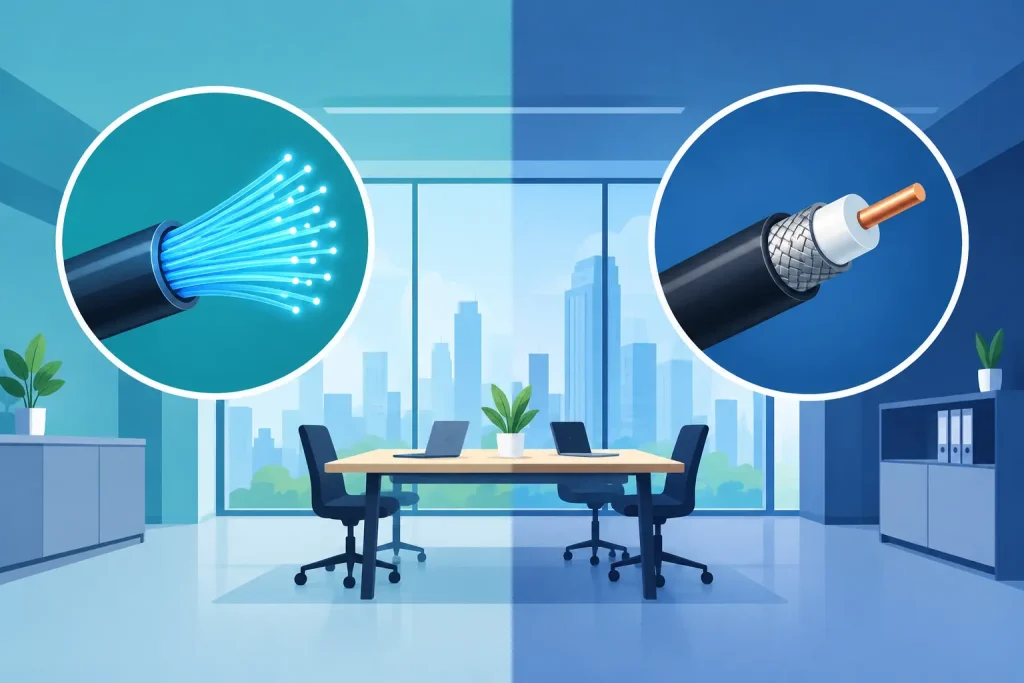
Redundant connectivity changes the equation. A primary circuit and an independently routed backup connection can keep essential operations moving when a provider outage, construction incident, or equipment problem takes down the main path. The right design depends on the site, available carriers, application requirements, and budget. A small clinic may need a practical fiber-and-wireless backup design, while a multi-site healthcare organization may require SD-WAN, centralized visibility, and automated traffic failover.
Carrier diversity matters as much as having two service invoices. Two circuits that share the same physical route or upstream provider can fail together. A carrier-neutral assessment should examine the actual path, service-level commitments, installation constraints, and recovery process before calling a site protected.
Wi-Fi Is Clinical Infrastructure, Not a Convenience
Wireless networks carry far more than guest traffic. Staff use mobile workstations, tablets, handheld devices, voice applications, and connected medical equipment throughout the day. In senior living settings, coverage also supports resident services, safety systems, and administrative operations across large or aging buildings.
A successful wireless deployment begins with a site-specific design, not a generic access point count. Construction materials, floor plans, elevator shafts, medical equipment, density, roaming needs, and outdoor areas all affect performance. Coverage has to be tested where people actually work, including patient rooms, medication areas, care stations, parking areas, and back-office spaces.
The network should also separate traffic by purpose. Clinical, corporate, guest, building systems, and Internet of Things devices should not all operate as if they are on the same trusted network. Segmentation limits exposure and makes troubleshooting more precise when something goes wrong.
Security Must Support Care, Not Stall It
Healthcare organizations are high-value targets because they manage sensitive records and often operate systems that cannot tolerate downtime. Security controls must reduce risk without making clinicians fight the environment to complete routine tasks.
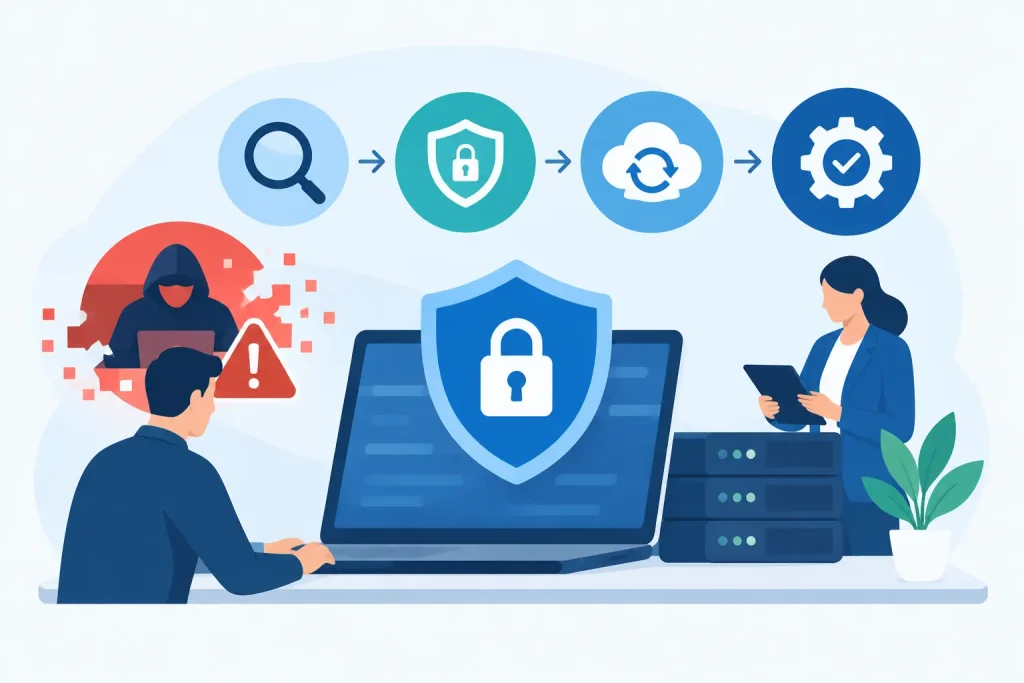
The strongest approach is layered. No single firewall, antivirus tool, or training session is enough. A managed program should combine identity protections, multi-factor authentication, endpoint monitoring, email security, network segmentation, patch management, secure backups, and active response procedures. Each control covers a different failure mode.
This is also where ownership matters. If a suspicious login, malware alert, or failed backup occurs, the question is not simply whether an alert was generated. The question is who investigates it, who contains the issue, who communicates with leadership, and who confirms that recovery is complete. A stack of security products without a defined operating process leaves too much work to chance.
Healthcare organizations also need to understand the boundary between technology support and compliance responsibility. Managed technology partners can help maintain safeguards, documentation, access controls, and recovery capabilities. But compliance is an organizational discipline that requires policies, training, governance, and oversight from the provider itself. The technology should make that work more defensible, not create a false sense of assurance.
Build for Recovery Before an Outage
Every healthcare leader should assume that systems will eventually fail, whether from a carrier outage, ransomware event, hardware problem, weather incident, or human error. Business continuity is the difference between a difficult day and a prolonged operational disruption.
Recovery planning should begin with priorities. Which systems must return first for patient care, communications, scheduling, billing, and safety? How much data loss is acceptable for each system? How long can each service be unavailable before the impact becomes unacceptable? Those answers determine backup frequency, retention, recovery architecture, and investment level.
A backup is only useful if it can be restored. Organizations should test recovery regularly and document the results. That includes validating not just files, but the applications, credentials, network access, and dependencies staff need to resume work. A recovery plan that exists only in a binder is not a recovery plan.
How to Evaluate Healthcare Technology Partners
Technology providers should be evaluated on their ability to own outcomes, not just install equipment. The right partner can translate clinical and operational requirements into an environment that is supportable over time.
During an assessment, healthcare leaders should expect clear answers to four questions:
- Who owns the issue when the network, phone system, endpoint, and carrier service are all involved?
- How is uptime measured, monitored, and communicated across each site?
- What happens after hours when a care-critical system or connection fails?
- How are security incidents, backup failures, and recurring performance issues escalated and resolved?
The answers reveal whether a provider is prepared to operate a mission-critical environment or simply sell individual services. Look for real engineers, documented response processes, visibility into carriers and circuits, and a support model that does not send staff into a 1-800 black hole during an outage.
For organizations with multiple sites, consistency is equally important. A standard architecture for networks, Wi-Fi, security, voice, and backups makes it easier to support new locations, identify risk, control costs, and compare performance. Standardization does not mean every site is identical. It means each exception is intentional, documented, and managed.
One Team That Owns the Whole Stack
The operational value of integrated managed services is accountability. When IT support, networking, connectivity, voice, cybersecurity, and disaster recovery are managed in isolated silos, internal teams become the escalation layer between vendors. That slows resolution precisely when time matters most.
Southeast Networks approaches this differently by bringing those core services under one managed relationship. The goal is not to force every organization into a fixed package. It is to create a technology environment where the people responsible for the network can see the circuits, support the endpoints, manage the phones, and coordinate the response when an incident crosses service boundaries.
That approach gives operations and IT leaders a clearer line of responsibility, more predictable oversight, and fewer gaps between a problem being reported and a problem being resolved.
Healthcare technology should make care easier to deliver, not harder to coordinate. Start by identifying the single points of failure that could interrupt your next shift, then assign clear ownership for removing them.