
A missed call is rarely just a missed call. For a senior living community, it may delay a family inquiry. For a healthcare office, it can disrupt patient coordination. For a multi-site retailer or property operator, it can leave staff without a dependable way to reach customers, vendors, or emergency services. Cloud telephony can improve flexibility and control, but only when it is designed as part of the broader business infrastructure.
The right question is not whether cloud calling has more features than a legacy phone system. The real question is whether it gives your organization a more reliable, secure, and manageable communications environment when the Internet connection degrades, a site loses power, or employees need to work from another location.
What Cloud Telephony Changes for Operations
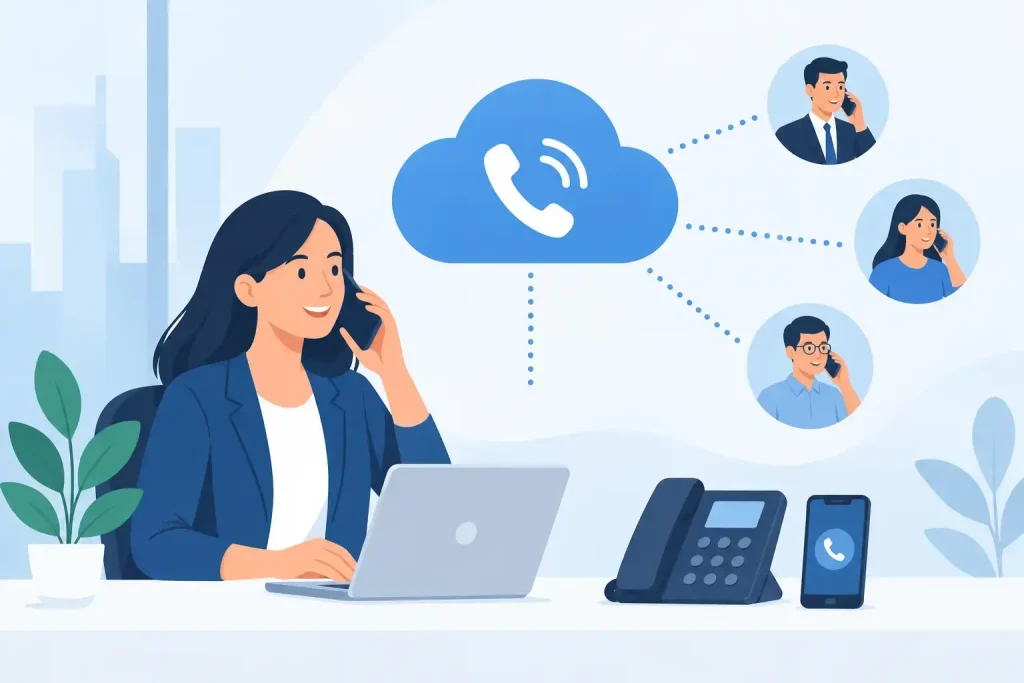
Cloud telephony moves call control, routing, voicemail, and collaboration services from a phone system located at one facility to a platform delivered through the network. Desk phones, softphone applications, mobile devices, and common-area phones connect to that service over an Internet connection.
That model can eliminate aging on-premises hardware and make it easier to support multiple locations under one calling plan. An employee can use the same extension at a corporate office, remote site, or home office. A central administrator can adjust call flows, business hours, auto attendants, and user permissions without waiting for a technician to visit each location.
Those advantages matter, but they do not remove the operational dependencies. Calls now rely on the local network, the wide-area connection, power availability, device configuration, and the provider’s voice platform. If any of those pieces are treated as someone else’s problem, the business still owns the disruption.
For organizations with several vendors handling IT, carrier circuits, Wi-Fi, phones, and security, cloud calling can expose the weak points in that model. A call-quality issue becomes a round of finger-pointing: the voice provider blames the Internet connection, the carrier says the circuit is up, and the IT firm points to the phone platform. A better approach assigns clear ownership across the full path from endpoint to carrier.
Designing Cloud Telephony for Uptime
A cloud phone platform is only as dependable as the environment carrying the calls. Before selecting features or handsets, assess the network and business continuity requirements at each site.
Start with the call path
Voice traffic is sensitive to delay, jitter, packet loss, and inconsistent bandwidth. A circuit can appear functional for web browsing while still delivering poor call quality. That is why a basic speed test is not a voice readiness assessment.
The network should identify and prioritize voice traffic, particularly at sites where guest Wi-Fi, security cameras, cloud applications, and staff devices share the same connection. Proper VLAN design, quality-of-service policies, switching capacity, and Wi-Fi coverage all affect the experience of a person on a call.
For a multi-site organization, standards matter. If every location has a different firewall configuration, Internet provider, and network design, supporting voice becomes harder and outages take longer to diagnose. Consistent architecture reduces operational guesswork and makes performance easier to measure.
Build for circuit and power failures
Internet outages happen. Construction damage, local carrier events, equipment failures, and weather can affect a site without warning. A cloud telephony deployment should define what happens when the primary circuit fails.
At critical locations, secondary connectivity may be justified through a diverse carrier path, wireless failover, or another appropriate option. The right choice depends on call volume, application demands, local carrier availability, and the cost of downtime. A small administrative office may accept temporary mobile forwarding. A healthcare facility, financial institution, or staffed residential community may require a more deliberate failover plan.
Power is equally important. Phones, switches, firewalls, wireless access points, and carrier equipment all need power. Battery backup may keep a voice environment running through a short interruption, but it must be sized and maintained for the equipment it supports. For longer outages, generator-backed power and documented procedures determine whether the site can continue operating.
Plan call routing before the outage
Failover is not complete until people know where calls will go. Main numbers can be routed to another site, a designated call group, or approved mobile devices when a location is unavailable. Those routes should be tested, not assumed.
Organizations should also review emergency calling requirements. Each phone’s location information must be accurate, especially in large buildings, campuses, senior living communities, and multi-tenant properties. A response team needs more than a street address when a caller needs help from a specific floor, unit, or wing.
Security and Governance Are Part of the Phone System
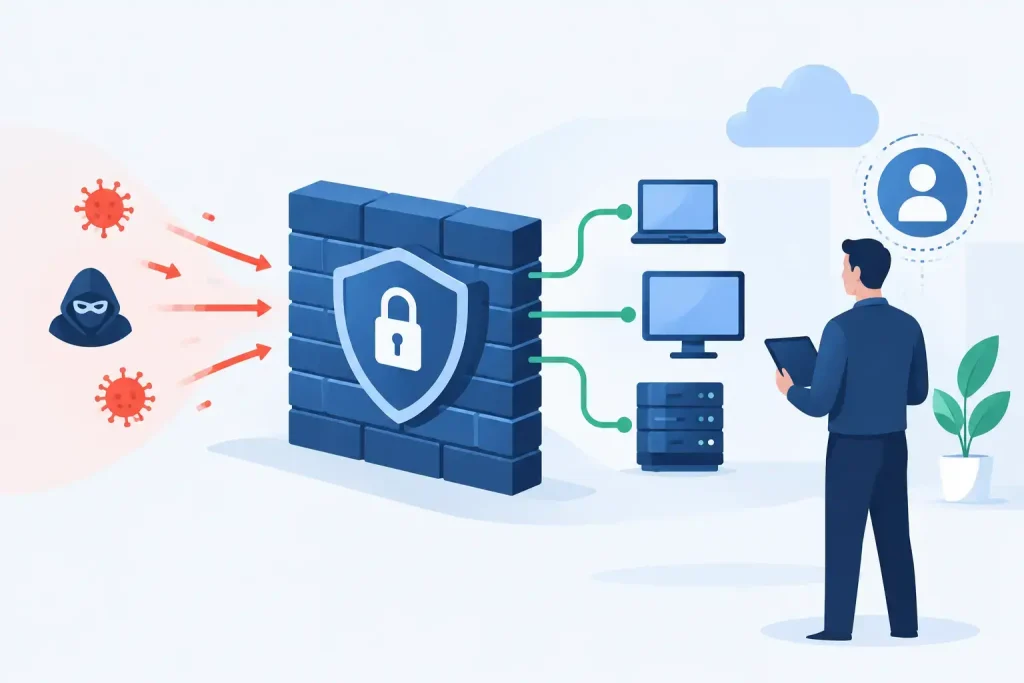
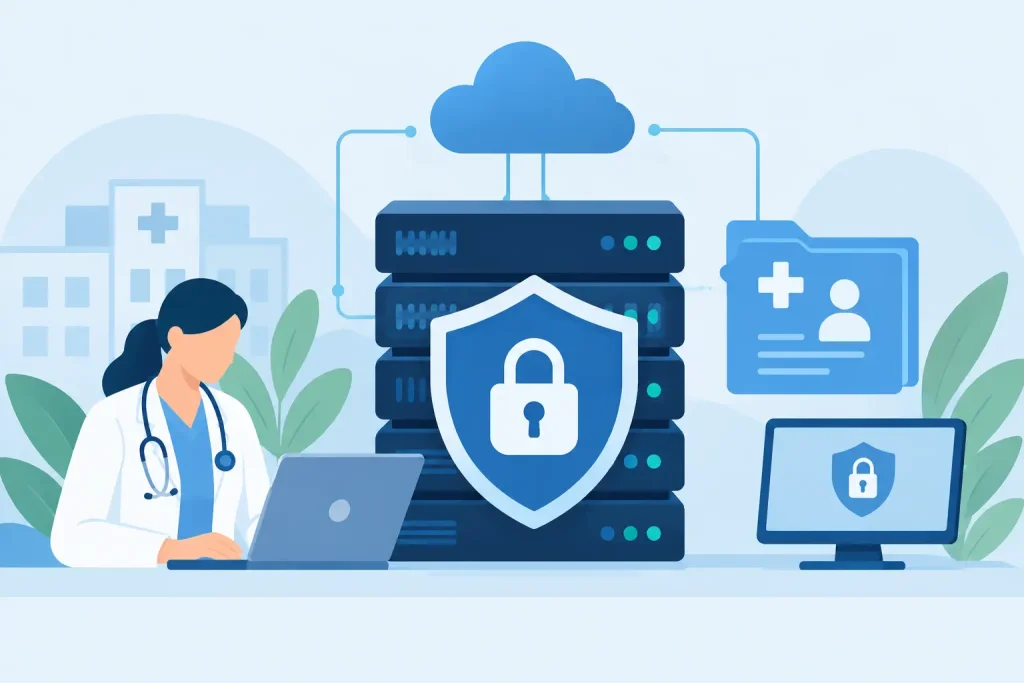
Voice systems are business systems. They hold call records, voicemail, user identities, contact data, and routing permissions. They can also be targeted for toll fraud, account takeover, phishing, and social engineering.
Security begins with identity controls. Administrative access should use multifactor authentication, unique accounts, and role-based permissions. A front-desk employee may need to update an extension or transfer calls, but should not have the ability to change billing settings, export call records, or alter company-wide routing.
Policies should cover softphones and mobile use as well. Remote work adds flexibility, but unmanaged personal devices, weak passwords, and public Wi-Fi create risk. Organizations handling sensitive information should determine which communications may occur over voice and messaging tools, how recordings are retained, and who can access them.
Call recording requires particular discipline. It can support quality assurance, training, dispute resolution, and compliance workflows, but it also creates data retention obligations. Recording rules vary by state and use case. The technical capability should never be treated as permission to record every conversation without legal and policy review.
A managed provider should also monitor for unusual calling patterns, unauthorized international dialing, repeated authentication failures, and configuration changes. Prevention is better than discovering fraudulent charges after the fact.
Deployment Should Follow the Business, Not the Feature List
Cloud telephony projects often fail at the handoff between technology design and daily operations. A platform may be technically sound, but if reception staff do not know the new call flow or a department’s after-hours routing was never validated, the customer experience suffers on day one.
Start by mapping how calls move through the organization. Identify the main numbers, department lines, emergency numbers, fax dependencies, paging systems, door intercoms, alarm panels, call queues, after-hours coverage, and escalation paths. This work is less glamorous than selecting handsets, but it prevents the most common deployment surprises.
Then decide where flexibility creates value. Softphones may be ideal for mobile managers and hybrid employees. Physical phones may still be the right fit at reception desks, nurses’ stations, classrooms, shared workspaces, and locations with rotating staff. The answer does not need to be all one or the other.
Pilot testing should include real calling scenarios: inbound transfers, outbound caller ID, voicemail delivery, remote access, failover routing, emergency dialing, and calls during peak network usage. Train the people who answer, transfer, and manage calls every day. Their feedback will reveal gaps that a configuration checklist can miss.
Choosing Accountability Over Another Vendor Portal
The cloud phone platform matters, but the service model matters just as much. Buyers should look beyond per-user pricing and ask who owns call quality, endpoint provisioning, carrier coordination, security controls, and outage response.
A provider that only manages the application may be adequate for a simple office with a stable network and internal IT team. It is a weaker fit for organizations that need coordinated support across circuits, firewalls, switches, Wi-Fi, endpoints, and voice. When those services are fragmented, every incident takes longer to isolate and resolve.
Ask practical questions during the evaluation: Is the network assessed before deployment? Who monitors the Internet circuit and local equipment? Is there a documented escalation process for a site outage? Can the provider support number porting, analog replacements, paging, and emergency location requirements? What response commitments apply after the installation is complete?
Southeast Networks approaches voice as one part of a managed environment, not a standalone subscription. That means real engineers can address the call path across the network and connectivity layers instead of sending customers into a 1-800 black hole between vendors.
Cloud telephony earns its value when it makes communication more dependable under pressure, not merely more convenient on a normal day. Build it around the way your organization operates, test it against realistic failures, and give one accountable team responsibility for keeping people connected.