
A branch manager opens a cloud-based patient record. A remote employee joins a video meeting from home. A vendor accesses an internal application from a laptop outside the corporate network. In each case, the old assumption that users, applications, and data sit safely behind one office firewall no longer holds. That is the operational problem behind the question: what is SASE?
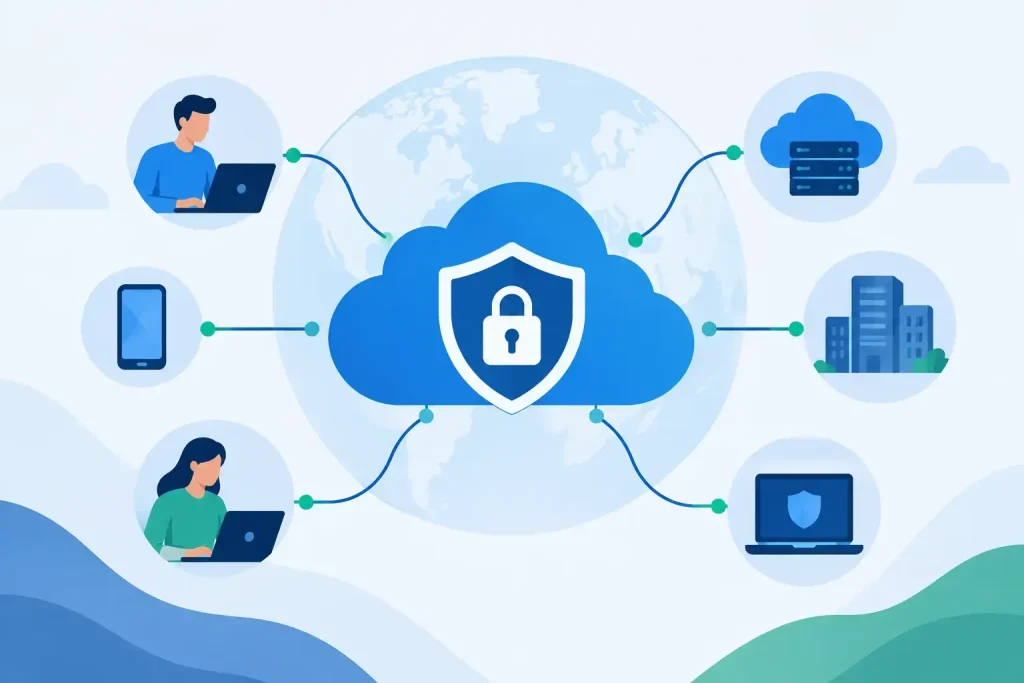
SASE, pronounced “sassy,” stands for Secure Access Service Edge. It is an architecture that combines wide-area networking and cloud-delivered security into one service model. Rather than backhauling every user and branch connection to a central data center for inspection, SASE applies network performance and security controls close to the user, device, or application being accessed.
For organizations with multiple sites, remote staff, cloud applications, and business-critical connectivity, SASE is not simply another security product. It is a different way to design and operate access across the environment.
What Is SASE?
The term was introduced to describe the convergence of two technology functions that were often purchased, operated, and troubleshot separately: network connectivity and cybersecurity. A SASE platform delivers both through a distributed cloud service.
At its core, SASE connects users and locations to applications through a policy-driven security layer. Instead of trusting someone because they are connected to the office network, it evaluates the connection based on identity, device posture, location, risk, and the specific resource requested.
A practical example is a senior living operator with communities in several states. Its teams may use cloud-based clinical systems, VoIP, payroll software, guest Wi-Fi, building systems, and internal file shares. A traditional design might route much of that traffic through a central firewall. A SASE design can secure and optimize access based on the application and user, whether the connection begins at a community, corporate office, home office, or mobile device.
The result is a more consistent operating model: one set of policies across locations and users, with less dependence on a single network perimeter.
The Core Components of a SASE Architecture
SASE is an architecture, not one specific product. Vendors package it differently, but a complete approach generally brings several capabilities together.
SD-WAN for Intelligent Connectivity
Software-defined wide area networking, or SD-WAN, directs traffic across available Internet, fiber, broadband, LTE, or 5G connections according to business policy. It can prioritize voice, clinical applications, payment systems, and video while steering lower-priority traffic differently.
For a multi-site organization, this matters because not all traffic needs the same route. Sending a Microsoft 365 session from a branch to a distant data center and back out to the Internet adds latency without adding value. SD-WAN can route that traffic efficiently while maintaining the controls required by the security policy.
Secure Web Gateway and Firewall Services
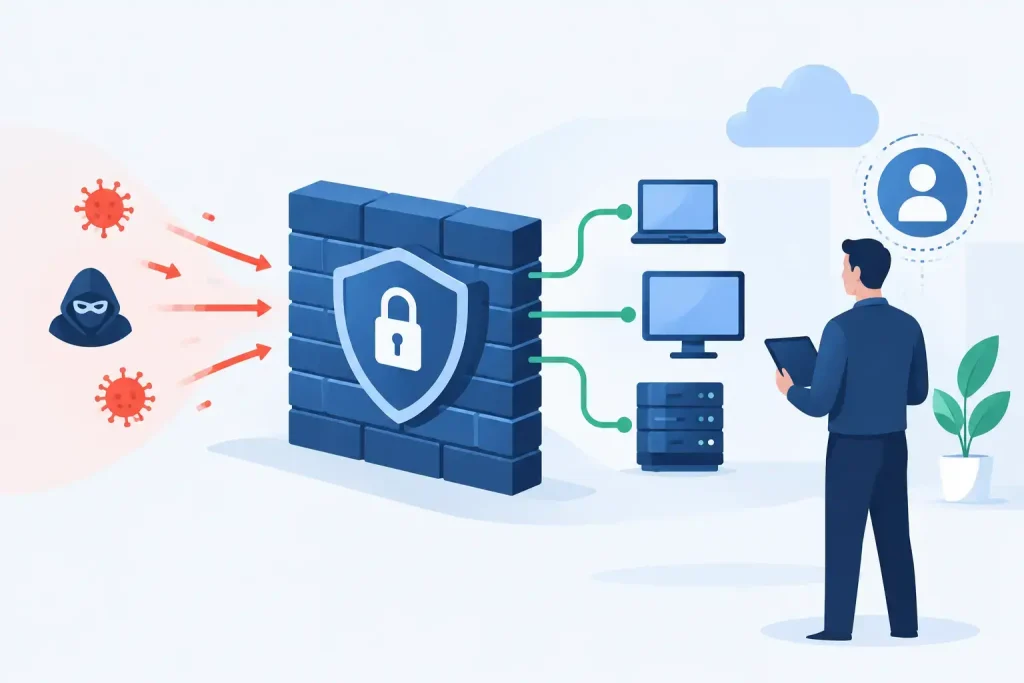
A secure web gateway inspects web traffic and enforces acceptable-use and threat-prevention policies. Firewall-as-a-service applies firewall controls from the cloud rather than relying only on appliances at each location.
These functions help block malicious destinations, suspicious downloads, command-and-control activity, and unauthorized applications. They also create more uniform protection when users work away from a managed office.
Zero Trust Network Access
Zero trust network access, commonly called ZTNA, gives a user access to a specific application instead of placing that user broadly onto the internal network. Access is granted after verifying identity and other context, then limited to what the person actually needs.
This is particularly useful for remote employees, contractors, third-party support teams, and employees who require access to one internal system rather than an entire network segment. It reduces the exposure that can come with traditional remote-access VPNs.
Cloud Access Security Broker and Data Protection
Cloud access security broker, or CASB, capabilities provide visibility and policy control for cloud applications. Depending on the platform, this may include identifying unauthorized cloud use, enforcing access rules, preventing risky file sharing, and applying data loss prevention controls.
The depth required depends on the organization. A financial institution handling sensitive documents needs stronger inspection and data controls than a small business using a limited set of cloud productivity applications. SASE should be designed around the actual data, workflows, and compliance obligations involved.
Why Organizations Are Moving Toward SASE
The business case for SASE usually starts with operational friction. Branches have inconsistent security. Remote users rely on VPNs that slow down cloud applications. IT teams manage separate providers for circuits, firewalls, endpoint protection, Wi-Fi, and access tools. When performance fails, each vendor points to another layer.
SASE can reduce that fragmentation by putting connectivity and security policy into a coordinated service model. It gives IT teams a clearer view of how traffic moves, which applications are being used, and where access is being denied or degraded.
For operations leaders, the value is continuity. A secure access model that works consistently across offices, retail locations, campuses, and remote workers can reduce the chance that an outage, misconfiguration, or weak remote connection becomes a business interruption.
For finance leaders, the appeal is often predictability. SASE may reduce the need to refresh a large collection of branch security appliances, although it introduces recurring subscription costs. The right comparison is not appliance cost versus subscription cost alone. It is the total operating cost of hardware, licensing, carrier management, incident response, support time, outages, and risk.
What SASE Does Not Solve by Itself
SASE is not a substitute for sound IT operations. It cannot fix poorly managed endpoints, weak identity controls, unsupported operating systems, untrained users, or an unreliable last-mile circuit.
It also does not automatically simplify every environment. Security inspection can affect application performance if policies are poorly designed. Legacy applications may require special routing or exceptions. Highly regulated organizations may need to validate data handling, logging, retention, and geographic processing requirements before selecting a provider.
There is also a concentration-of-risk consideration. When a single SASE service becomes central to user access, provider resilience, Internet path diversity, and failover planning matter. A good design includes redundant connectivity where warranted, clear operational ownership, and tested procedures for service disruption.
When SASE Makes the Most Sense
SASE is a strong fit when the organization has distributed users or locations, relies heavily on cloud applications, and needs consistent policy enforcement without maintaining a separate security stack at every site.
It is especially relevant for healthcare groups, senior living portfolios, retail operators, property organizations, financial services firms, and private schools. These environments often combine multiple locations, sensitive data, guest or resident access, voice and video traffic, lean internal IT teams, and little tolerance for downtime.
A single-site business with a stable office-based workforce may not need a full SASE deployment immediately. Even then, adopting zero trust access principles and cloud-based security controls can be a sensible step. The architecture should follow the operating reality, not a technology trend.
How to Evaluate a SASE Approach
Start with traffic and application discovery. Identify which applications are cloud-based, which remain in data centers or private environments, which users need access, and what happens when a primary circuit fails. This baseline prevents an attractive platform from being deployed against assumptions rather than facts.
Next, define policy outcomes in business terms. A call center needs voice quality during a circuit event. A clinic needs reliable access to clinical systems. A retail location needs payment traffic prioritized and isolated from guest Wi-Fi. These requirements should drive routing, segmentation, security inspection, and redundancy decisions.
Then examine accountability. Some providers sell a SASE license but leave the customer to coordinate carriers, hardware, policy administration, endpoint teams, and incident troubleshooting. That model may work for organizations with deep internal network and security teams. Others need one team that owns the whole stack, from connectivity sourcing and deployment through monitoring, escalation, and ongoing policy management.
Ask direct questions about support coverage, service-level commitments, visibility, data logging, identity integrations, branch hardware, Internet failover, and the process for troubleshooting a degraded application. Real engineers, not a 1-800 black hole, make a meaningful difference when a location cannot operate.
SASE Is an Operating Model, Not a Checkbox
The best SASE deployment is not the one with the longest feature list. It is the one that makes secure access easier to operate, easier to troubleshoot, and more dependable during normal business and during failure conditions.
For organizations that depend on always-on technology, the next step is to map how users, sites, devices, and applications actually connect today. That assessment turns SASE from an industry acronym into a practical plan for stronger security, better performance, and clearer accountability.