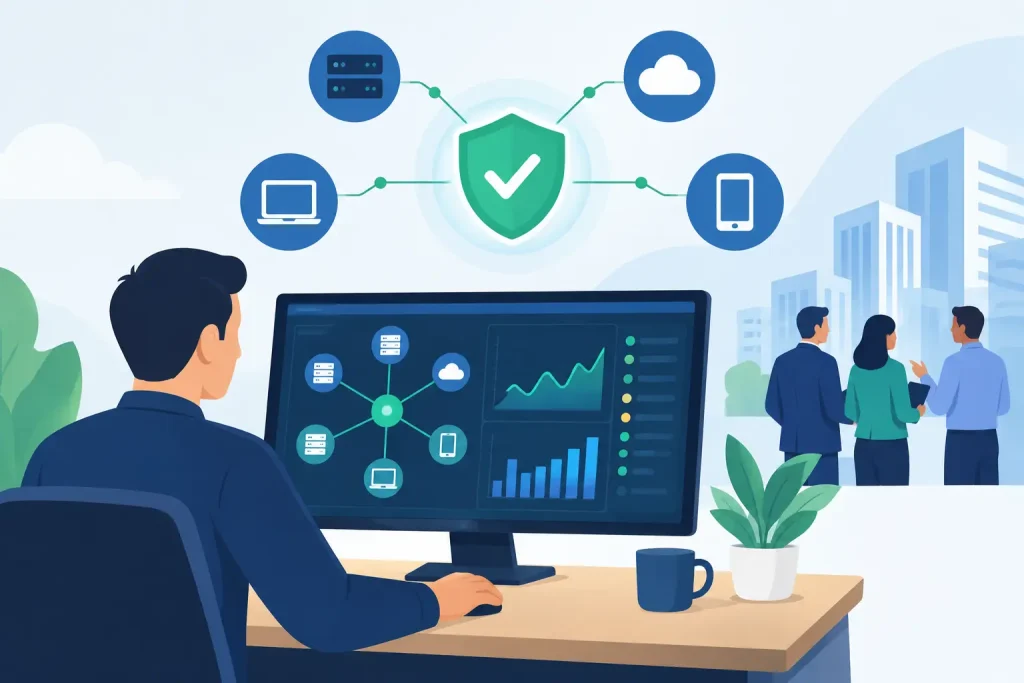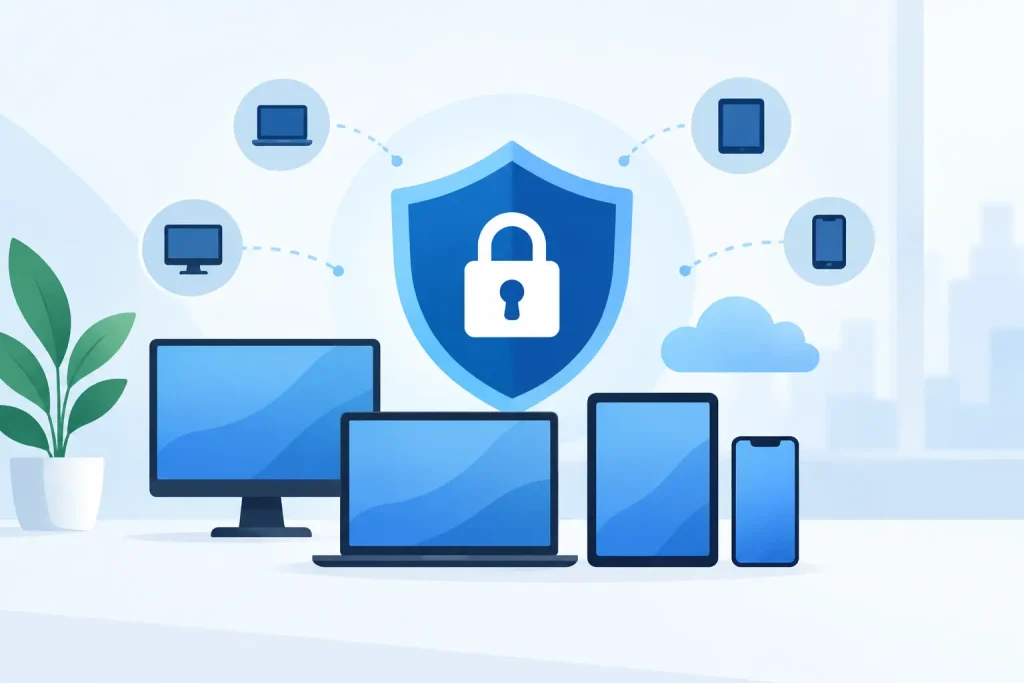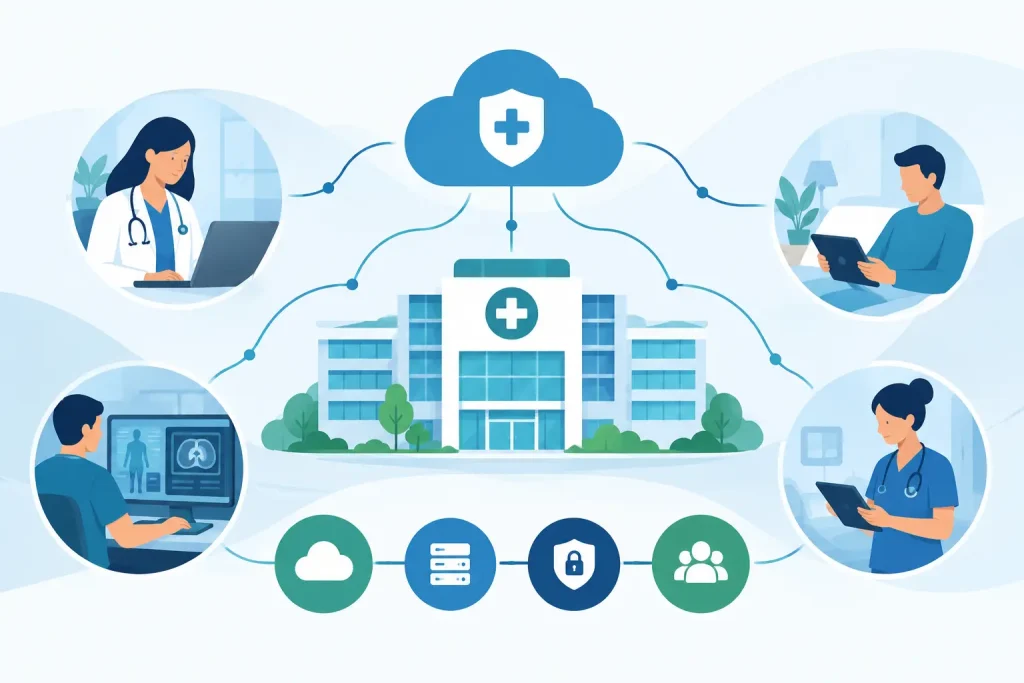

A VoIP outage is rarely just a phone problem. In a clinic, it can interrupt patient coordination. In senior living, it can delay a response to a resident or family. In retail and multi-site operations, it can cut off customer service, payment support, and vendor communication at once. Knowing how to secure voip traffic means protecting the calls themselves, the network paths carrying them, and the systems that manage every extension.
VoIP security should be treated as an operational discipline, not a one-time configuration task. A secure deployment reduces the likelihood of eavesdropping, toll fraud, account takeover, denial-of-service attacks, and avoidable call-quality failures. It also gives IT and operations leaders clear ownership when an issue crosses the boundary between the phone platform, LAN, Wi-Fi, firewall, and Internet circuit.
How to Secure VoIP Traffic Starts With the Right Architecture
Voice traffic has different requirements from ordinary business applications. It is sensitive to latency, jitter, packet loss, and inconsistent routing. That does not mean it should receive special treatment at the expense of security. It means the voice design must account for both performance and control.
Start by documenting the call path. Identify where phones register, where signaling is processed, whether the platform is on premises or cloud-hosted, which sites use local Internet breakout, and which carrier services support inbound and outbound calls. Include softphones, mobile clients, conference room systems, analog adapters, paging devices, and emergency calling equipment. These overlooked endpoints often create the widest attack surface.
A design that depends on undocumented exceptions is difficult to secure and even harder to support during an outage. Every site should have an approved network diagram, defined voice VLANs, known firewall rules, and a clear record of who owns the PBX, session border controller, carrier service, and DNS configuration.
Separate Voice From General User Traffic
Place phones and voice devices on dedicated VLANs or segmented network zones. This limits lateral movement if a workstation is compromised and makes voice traffic easier to prioritize, monitor, and troubleshoot. Segmentation should apply to physical phones, voice gateways, and management interfaces, not only to the SIP servers.
The goal is controlled communication, not complete isolation. Phones need access to the services required for registration, DNS, NTP, provisioning, and calling. They should not have unrestricted access to user networks, server environments, or the public Internet. Use firewall policies and access control lists that permit only the specific protocols, ports, and destinations the environment requires.
Quality of Service should be configured alongside segmentation. QoS is not a security control, but it protects the business result of the security design. A firewall policy that is technically correct but introduces delay or packet loss can turn a security improvement into a service issue. Test call quality under normal conditions and during peak network utilization.
Encrypt Signaling and Media
VoIP calls involve two primary traffic types: signaling and media. Signaling establishes, modifies, and ends the call. Media carries the voice audio. Both need protection.
Use Transport Layer Security, or TLS, to encrypt SIP signaling. This helps protect registration credentials, dialing information, and call-control messages from interception or modification. Use Secure Real-Time Transport Protocol, or SRTP, to encrypt the voice media stream. Without SRTP, voice packets can potentially be captured and reconstructed by an attacker with access to the right network segment.
Encryption only works when certificates and device support are managed correctly. Expired certificates, weak cipher settings, and phones that silently fall back to unencrypted communication can create gaps that are missed until an incident occurs. Maintain a certificate renewal process, validate encryption settings after firmware updates, and remove legacy endpoints that cannot support current security requirements.
A virtual private network can add protection for remote users or sites, but it is not automatically the right answer for every deployment. VPN overhead can affect call quality, and poorly configured tunnels can complicate troubleshooting. For remote work, evaluate whether encrypted SIP and SRTP over a properly secured Internet connection, a managed secure access service, or a site-to-site VPN best fits the call platform and operational model.
Use a Session Border Controller at the Edge
A session border controller, or SBC, is one of the most effective controls for organizations with SIP trunks, hosted voice services, or multiple locations. It acts as a security and interoperability boundary between the internal voice environment and outside networks.
A properly configured SBC can normalize SIP traffic, hide internal network details, enforce call-routing policies, prevent malformed traffic from reaching the PBX, and apply rate limits against denial-of-service attempts. It can also support encryption policies and help control which carriers, trunks, and remote endpoints are permitted to connect.
Not every small deployment needs a dedicated on-premises appliance. A cloud-delivered SBC or carrier-managed option may be appropriate, particularly for distributed organizations. The key question is accountability: someone must own the edge policy, monitor attempted abuse, and validate changes before they affect live calling.
Avoid exposing a PBX or phone system directly to the public Internet whenever possible. Direct exposure invites automated scanning, password attacks, and SIP-based exploitation. If Internet-facing services are necessary, place them behind an SBC or tightly managed security boundary with explicit rules and continuous monitoring.
Lock Down Identity, Administration, and Provisioning
Many VoIP incidents begin with weak credentials, not exotic attacks. Default phone passwords, reused administrator accounts, shared web portal credentials, and excessive privileges all create unnecessary risk.
Require unique accounts for administrators and use multi-factor authentication wherever the platform supports it. Limit administrative access by role so help desk staff, site managers, and system engineers receive only the access they need. Remove accounts immediately when employees or vendors no longer require them, and review privileged access on a recurring schedule.
Protect phone provisioning as carefully as the call platform. Provisioning servers often contain device configuration files, authentication data, and service details that attackers can use to register rogue endpoints. Restrict provisioning traffic to approved device networks, use encrypted provisioning methods, and verify that new devices are authorized before they receive configuration.
Administrative interfaces should not be open to every network. Restrict access to designated management networks, approved jump hosts, or trusted administrative IP addresses. Log successful and failed administrative attempts so unusual access can be investigated before it becomes a service disruption.
Prevent Toll Fraud Before It Becomes a Finance Problem
Toll fraud can escalate quickly. An attacker who gains control of an extension, trunk, or administrative portal may place high-cost international or premium-rate calls outside business hours. The first sign is often a carrier invoice, long after the damage is done.
Set outbound calling permissions based on business need. Most users do not need unrestricted international dialing, and many organizations can block premium-rate destinations entirely. Apply separate permissions to lobby phones, common-area devices, conference rooms, and analog adapters, which are frequently less visible than employee desk phones.
Establish spend thresholds and abnormal-call alerts with the voice provider or carrier. Alerts should cover unusual international activity, repeated failed registrations, sudden increases in concurrent calls, and calls placed at unusual times. A clear response process matters as much as the alert itself: define who can suspend a trunk, block a destination, or reset compromised credentials after hours.
Monitor Voice Security and Call Performance Together
Security tools that only report blocked attacks are not enough. Voice monitoring should correlate security events with registration failures, dropped calls, packet loss, jitter, latency, and circuit performance. A sudden rise in failed registrations may indicate a password attack, a certificate problem, a DNS issue, or an Internet path failure. Context determines the response.
Centralize logs from the PBX or hosted platform, SBC, firewall, switches, wireless infrastructure, and identity systems where practical. Establish baselines for normal call volume, geographic patterns, registration activity, and bandwidth use. This gives the team a reference point when something changes.
For multi-site organizations, monitor each location independently. A network-wide dashboard can hide a local issue affecting a single property, clinic, or campus. Site-level visibility helps teams isolate whether the problem is with the local LAN, Wi-Fi, power, carrier circuit, voice platform, or endpoint fleet.
Build VoIP Security Into Business Continuity
Secure voice services must remain usable when a circuit, device, provider, or site fails. That requires more than backups. Define how calls will route during an outage, who can change routing, and how employees will communicate if desk phones are unavailable.
Options may include carrier-level call forwarding, secondary Internet circuits, cellular failover, cloud calling access through managed devices, and alternate contact centers. The right approach depends on the organization’s call volume, regulatory obligations, geographic footprint, and tolerance for disruption. A senior living community and a small back-office location should not be engineered to the same recovery target.
Test failover procedures periodically. Confirm that emergency calling information remains accurate, alternate routes reach staffed personnel, and security controls still apply when traffic uses a backup path. Changes to carriers, locations, or phone platforms should trigger a review of both continuity and security settings.
Make Security an Owned Operating Process
The strongest VoIP configuration loses value if nobody owns patching, certificate renewal, carrier coordination, firewall changes, and incident response. Voice systems touch too many parts of the stack to be managed as an isolated service.
That is why organizations benefit from one team that can see the whole environment: endpoint network access, Wi-Fi, switching, firewalls, Internet circuits, hosted voice, and recovery procedures. Southeast Networks approaches voice as part of the operating infrastructure, with real engineers accountable for the dependencies that determine whether calls stay secure and available.
The practical next step is to review your current call path and ask a direct question: if a phone account is compromised or a primary circuit fails at 2 a.m., does your team know what will happen next and who has the authority to act? If the answer is unclear, that is the gap to close before it becomes a business event.