
A ransomware alert at 2:13 a.m. does not wait for the IT manager to be back in the office. Neither does a compromised Microsoft 365 account, an unfamiliar administrator login, or malware moving from one endpoint to another. That is why businesses need SOC monitoring: the ability to detect, investigate, and respond to security events while the business is operating, unattended, or under pressure.
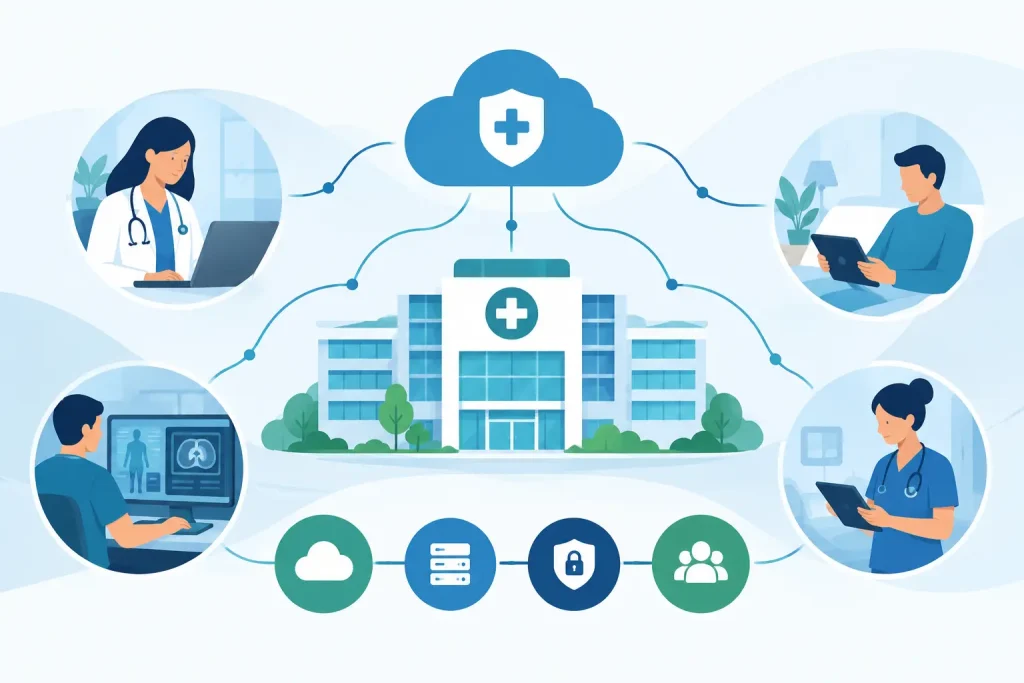
For healthcare, senior living, financial services, education, retail, and multi-site organizations, cybersecurity is an operations issue. A security event can interrupt patient care, point-of-sale transactions, resident communications, classroom access, tenant services, and core business systems. The question is not whether a firewall or endpoint tool produces alerts. The question is whether qualified people are watching those alerts, understanding the context, and taking the right action before an incident becomes downtime.
What SOC Monitoring Actually Covers
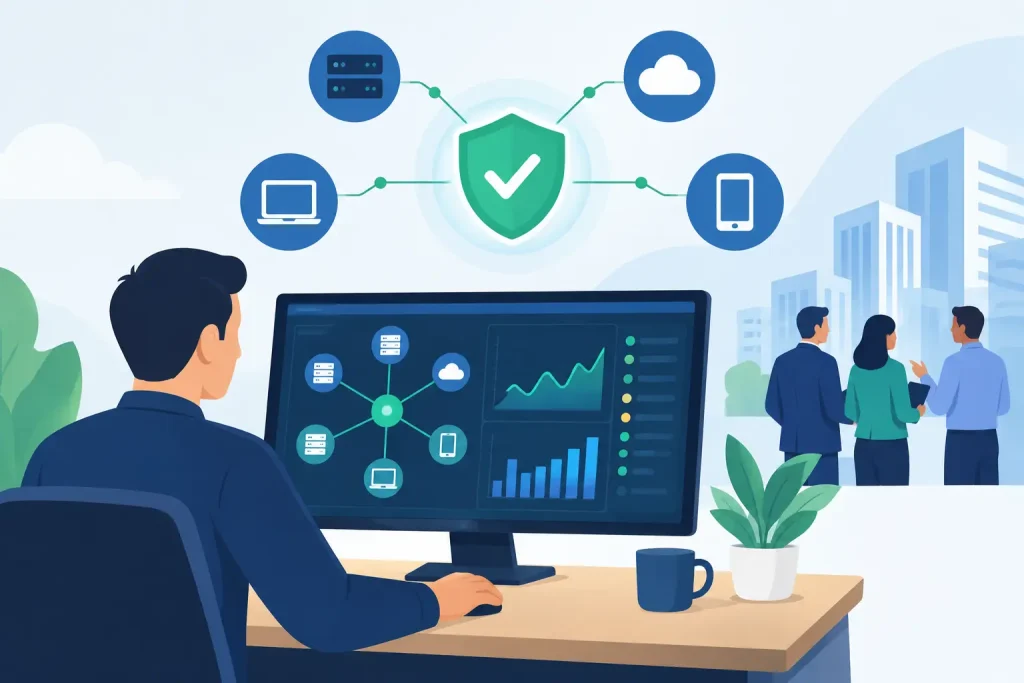
A security operations center, or SOC, is the function responsible for continuous security visibility and incident response. SOC monitoring brings together signals from across the environment – endpoints, firewalls, identity platforms, email systems, cloud applications, servers, and network activity – then evaluates those signals for evidence of real risk.
That distinction matters. Most organizations already have security tools that generate logs, notifications, and dashboards. Those tools are necessary, but they are not a SOC. A software alert can identify suspicious activity. It cannot reliably determine whether an employee is traveling, whether a vendor connection is expected, whether an endpoint is mission-critical, or whether a pattern of events indicates an active attack.
A functioning SOC combines technology with trained analysts, established response procedures, and escalation paths. It filters routine noise, investigates meaningful events, and gives the business a clear answer: what happened, what was affected, what action was taken, and what still requires attention.
Why Businesses Need SOC Monitoring Beyond Basic Security Tools
Security products are often deployed one at a time: endpoint protection, email filtering, multi-factor authentication, a next-generation firewall, and cloud backups. Each layer reduces risk. But when those layers are managed in separate portals by separate vendors, no one may see the full sequence of an attack.
Consider a common scenario. An employee approves a fraudulent sign-in prompt. An attacker accesses the user’s email, creates an inbox rule to hide security notifications, then uses that account to send convincing messages internally. Endpoint protection may never trigger. Email filtering may see only normal-looking internal traffic. Without correlation and investigation across identity, email, and network events, the organization can lose valuable response time.
SOC monitoring is built to connect those signals. It helps identify behavior that does not fit the normal pattern of the environment, such as impossible travel, privilege escalation, unusual data transfers, repeated failed logins, or a new device communicating with known malicious infrastructure. More importantly, it turns detection into accountable action.
For a business leader, the value is straightforward: fewer unanswered alerts, faster containment, and less opportunity for an incident to spread through the organization.
Faster Response Limits Business Disruption
The first minutes of an incident matter. If a compromised account is disabled before it reaches sensitive systems, the event may remain contained. If ransomware activity is isolated before it moves across shared drives and servers, recovery may be measured in hours rather than days.
Without around-the-clock monitoring, many organizations discover incidents after the fact. A user reports a strange email. A file share becomes unavailable. A bank calls about a suspicious payment request. By then, responders are working from a weaker position because the attacker has had time to establish access, collect information, or disable defenses.
SOC monitoring shortens the gap between detection and response. Depending on the service design, analysts may investigate, isolate a device, disable an account, block a connection, or escalate to the organization’s IT team under agreed procedures. The right response authority should be defined before an emergency, not debated while systems are at risk.
It Reduces the Burden on Internal IT
Many internal IT teams are already responsible for support tickets, new user setup, network issues, software updates, vendor coordination, and strategic projects. Asking that same team to review high volumes of security alerts after hours is not a sustainable operating model.
SOC monitoring does not replace internal IT leadership. It gives that leadership a specialized extension of coverage. Analysts can triage alerts and provide evidence-based escalation, while the internal team stays focused on business priorities and environment-specific decisions.
This is especially useful for organizations with lean IT departments or multiple locations. A single IT manager cannot physically be everywhere, and a single help desk queue is not an incident response function. The business needs defined ownership when security signals appear outside normal working hours.
It Creates Better Accountability Across Vendors
Fragmented technology environments create fragmented incident response. The firewall vendor says the issue is at the endpoint. The endpoint vendor points to identity. The connectivity provider reports that the circuit is stable. Meanwhile, operations leaders are left coordinating the investigation.
A well-designed SOC model creates a central security view and a documented escalation process. That does not mean one provider must supply every technology product. It means someone is accountable for seeing the evidence across systems, determining the likely cause, and moving the issue to resolution.
This is where a managed technology partner with network, infrastructure, and security visibility can make a practical difference. Security incidents frequently touch more than one layer of the stack. One team that understands the endpoint, user identity, network path, firewall policy, and carrier connectivity can reduce the time lost to vendor handoffs.
SOC Monitoring Supports Compliance, But It Is Not Just a Checkbox
Healthcare organizations, financial institutions, and education providers face heightened expectations around access controls, auditability, incident handling, and protection of sensitive data. SOC monitoring can support these obligations by maintaining event records, documenting investigations, and demonstrating that security controls are actively overseen.
But compliance alone is not the reason to invest. A compliant-looking policy does not stop a compromised account from sending fraudulent payment instructions. A completed risk assessment does not contain malware at midnight. Monitoring is valuable because it strengthens the organization’s ability to operate through real events, not merely because it produces documentation.
The exact compliance requirements vary by industry, contract, and state. Organizations should align monitoring, retention, escalation, and reporting practices with their specific obligations. A generic service package may not be sufficient for an environment that handles protected health information, payment data, or sensitive student records.
What to Expect From a SOC Monitoring Service
Not every service described as SOC monitoring provides the same level of coverage. Some platforms collect alerts but leave all investigation to the customer. Others provide analysts but do not have authority to contain threats. Some focus only on endpoints, leaving identity, email, cloud applications, and network events outside the view.
Before selecting a provider, decision-makers should understand four operational points: which systems are monitored, whether coverage is truly 24/7, what actions can be taken without waiting for approval, and how incidents are escalated to the people who own the business response. Reporting also matters. Monthly reports should show more than a count of blocked threats. They should identify recurring risks, unresolved findings, response performance, and recommended improvements.
There are trade-offs. A fully managed response model can deliver the fastest containment, but it requires trust, clear authorization, and accurate asset documentation. A co-managed model gives internal IT more control, but it can slow response if approvals are difficult to reach. The right model depends on the organization’s staffing, risk tolerance, regulatory requirements, and operational hours.
Building Monitoring Into a Resilient Technology Plan
SOC monitoring works best when it is part of a disciplined security and continuity strategy. Multi-factor authentication, endpoint protection, secure backups, network segmentation, email security, patch management, and tested recovery procedures still matter. Monitoring provides the visibility and response layer that helps those controls work together under real conditions.
It also depends on a clean foundation. Unmanaged devices, stale user accounts, undocumented applications, and inconsistent firewall rules create blind spots. Organizations should begin with an accurate inventory of users, devices, locations, critical applications, and recovery priorities. From there, the monitoring service can be tuned to the business rather than operated as a generic alert feed.
The goal is not to create more security noise. It is to establish a dependable operating model: meaningful events are identified quickly, the right people are engaged, containment happens with authority, and lessons from each event improve the environment.
A business does not need to assume an attack will succeed to prepare for one. It needs to decide who is watching, who can act, and how quickly the organization can return to normal when something does go wrong.