A call center loses voice service for 20 minutes. A senior living community cannot access cloud-based resident records. A retailer’s payment terminals go offline at peak hours. In each case, the question is not whether the organization has a network. It is who needs network monitoring before a small fault becomes an operational event.
The short answer is any organization where connectivity, applications, devices, or communications affect revenue, safety, compliance, customer experience, or daily operations. That includes far more businesses than the traditional image of a large enterprise data center.
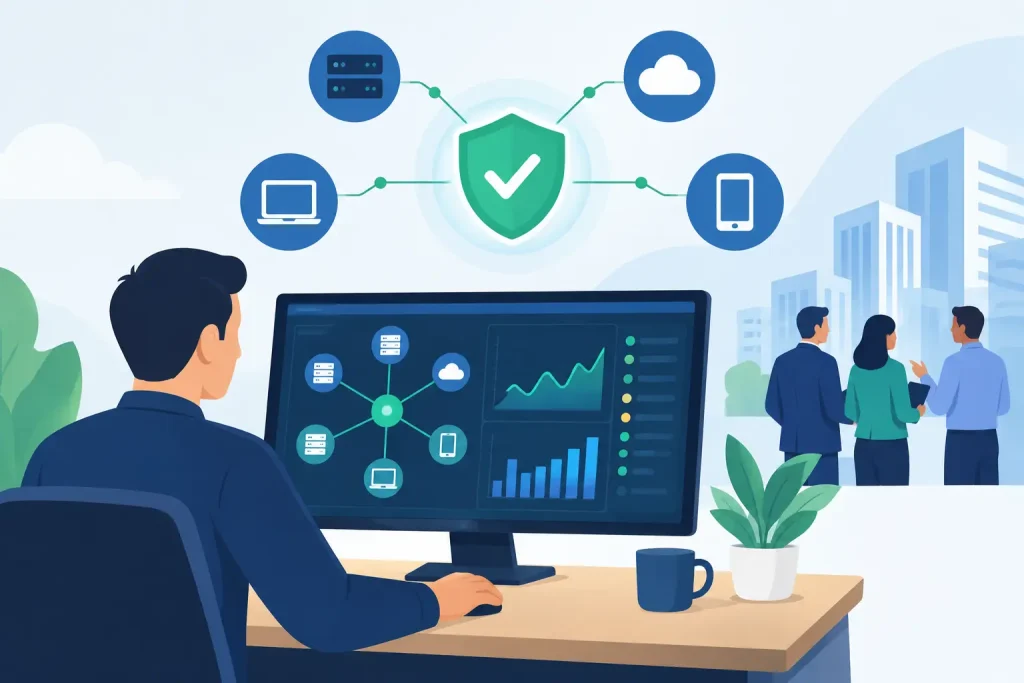
Network monitoring is not simply watching for an internet outage. It is continuous visibility into the health and performance of the infrastructure people depend on: circuits, firewalls, switches, Wi-Fi, access points, servers, VoIP systems, critical applications, and connected endpoints. Done well, it identifies warning signs early, gives engineers useful diagnostic data, and creates a clear path to resolution when something fails.
Who Needs Network Monitoring Most?
Organizations with a single office and a small number of users may be able to tolerate some manual troubleshooting. Even then, that decision depends on the cost of interruption. Once an organization has multiple locations, shared cloud applications, guest Wi-Fi, payment systems, voice services, compliance obligations, or limited internal IT coverage, reactive support becomes a costly operating model.
The businesses that benefit most are those that cannot reasonably tell employees, customers, patients, residents, students, or tenants to wait while someone figures out what went wrong.
Healthcare and senior living providers
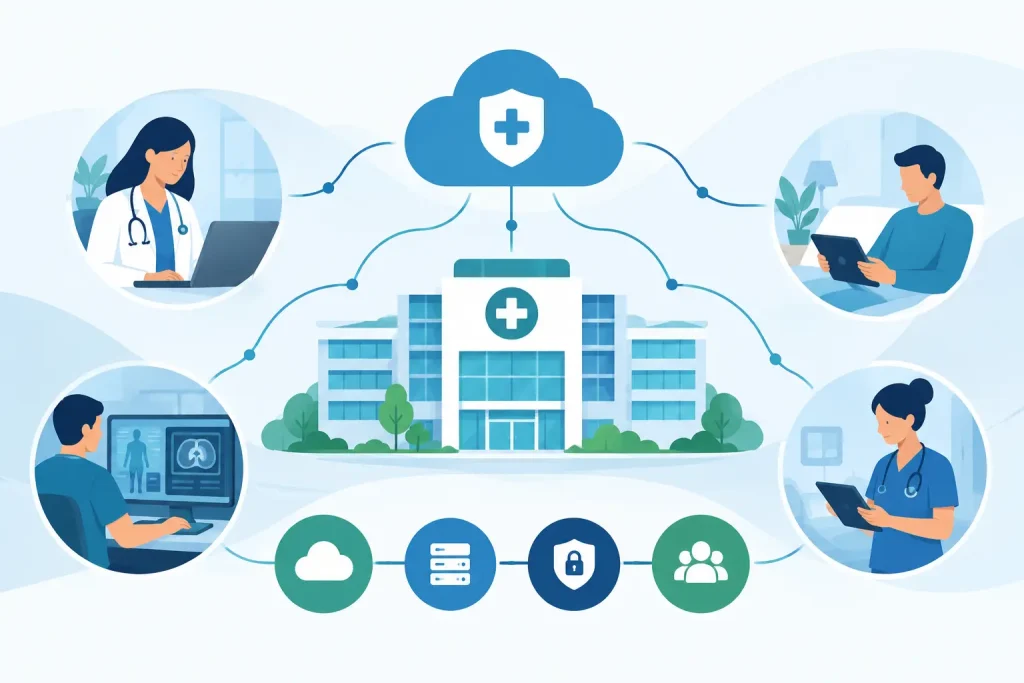
Clinical and care environments rely on stable connectivity for records access, communications, security systems, medication workflows, guest services, and connected devices. A network issue may not always stop patient care, but it can slow decisions and create risk at the worst possible time.
Monitoring helps distinguish between an internet carrier problem, a local switching issue, degraded Wi-Fi coverage, an overloaded circuit, or a failing device. That distinction matters because the fastest fix starts with knowing where the problem actually sits. For organizations managing several facilities, centralized visibility also prevents site staff from becoming the default technology help desk.
Retail and customer-facing locations
For retailers, restaurants, financial branches, and service businesses, a network outage can immediately affect transactions, inventory access, customer communications, and brand trust. A store may still have power and open doors, yet be unable to process card payments or reach its business applications.
Network monitoring gives operations and IT teams a way to see whether an outage is isolated to one location, caused by a circuit failure, related to firewall performance, or affecting a broader service. It also supports better conversations with carriers. Instead of reporting that “the internet is slow,” a team can provide timestamps, packet loss data, circuit status, and evidence of the affected path.
Multi-site organizations
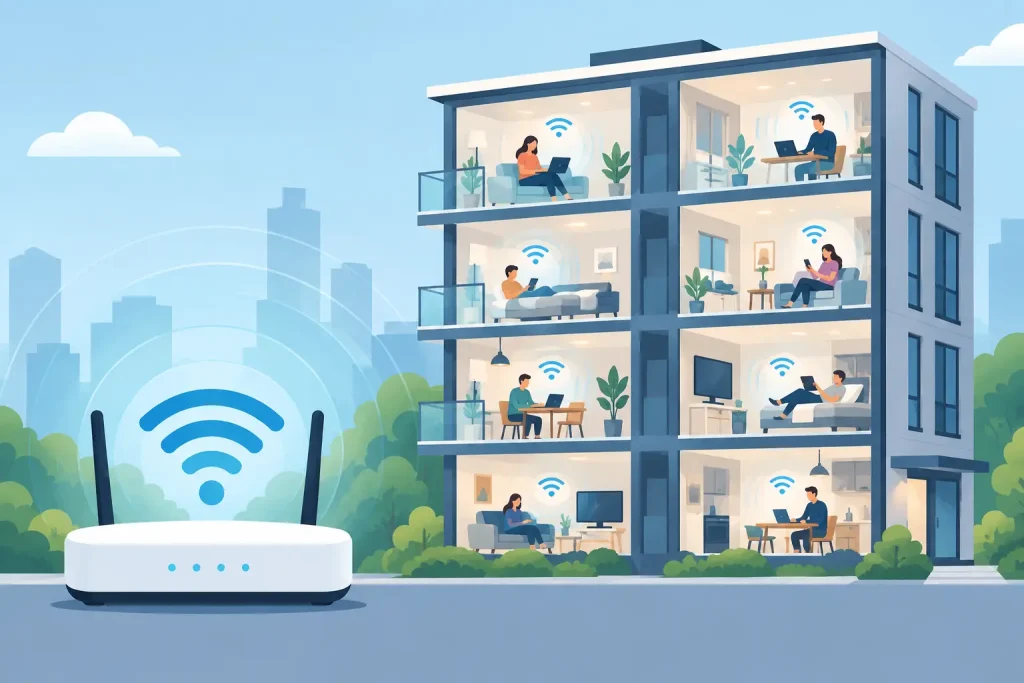
The need becomes more urgent as locations multiply. A commercial property group, private education network, multi-dwelling unit operator, or regional business may have different circuits, equipment ages, and local vendors at each site. Without centralized monitoring, every incident starts as an investigation.
That lack of consistency creates vendor friction. Someone has to determine whether to call the internet provider, phone vendor, cabling contractor, Wi-Fi provider, managed IT company, or application support desk. A monitored environment shortens that process by showing what is healthy, what changed, and who owns the next action.
Organizations with voice, cloud, and security dependencies
Cloud adoption does not eliminate network responsibility. It makes network performance more visible to every user. When business applications, file platforms, customer systems, and collaboration tools live outside the building, internet quality and internal network design directly affect productivity.
The same is true for VoIP. Poor call quality is often blamed on the phone system, but the underlying cause may be jitter, latency, packet loss, Wi-Fi interference, or an overloaded connection. Monitoring turns those complaints into measurable conditions that engineers can diagnose and correct.
Security adds another reason. Unexpected traffic patterns, repeated device failures, configuration changes, or loss of communication with a firewall can signal more than a routine performance problem. Monitoring does not replace a complete cybersecurity program, but it provides visibility that helps teams recognize when the environment is behaving abnormally.
What Network Monitoring Should Actually Watch
A basic uptime check has value, but it is not enough for a business that depends on technology. A circuit can be technically online while users experience slow applications, dropped calls, or unusable Wi-Fi.
Effective monitoring looks at availability and performance together. That includes internet circuit status, bandwidth utilization, latency, packet loss, and jitter. It also tracks the health of core network equipment, firewall status, switch ports, wireless access points, and critical services. For environments using VoIP, visibility into call-quality conditions is especially valuable.
The goal is not to generate a flood of alerts. It is to create actionable awareness. Alerts should be prioritized, routed to the right team, and tied to documented response procedures. An alert at 2:00 a.m. only improves resilience if someone is accountable for reviewing it and acting appropriately.
This is where the difference between software and managed oversight becomes clear. Monitoring tools can collect data. They do not automatically coordinate a carrier escalation, replace failing equipment, validate a fix, or explain the business impact to leadership. Those outcomes require capable people and defined ownership.
The Cost of Waiting for Users to Report a Problem
Most organizations already have a form of monitoring: employees call when something is broken. The issue is that users typically report symptoms after performance has already degraded enough to affect work.
By that point, the business may be losing transactions, delaying care, fielding customer complaints, or pulling internal staff away from higher-value work. The resulting ticket may contain limited details, particularly when the issue is intermittent. A network can recover before an engineer begins investigating, leaving no clear evidence of what happened.
Proactive monitoring creates a better timeline. It can show that packet loss began at 10:14 a.m., a firewall interface reset at 10:18, and service recovered after the carrier performed maintenance at 10:31. That information supports faster remediation and more accurate accountability.
It also changes maintenance planning. Persistent high bandwidth utilization, recurring wireless congestion, or repeated hardware alerts give leaders a basis for investment decisions before a failure forces an emergency purchase.
When Basic Monitoring May Be Enough
Not every organization requires a 24/7 network operations model from day one. A small professional office with one internet circuit, minimal cloud dependency, and staff who can tolerate occasional disruption may need straightforward device and connection alerts rather than full managed response.
But basic monitoring should be a deliberate choice, not an assumption based on company size. A ten-person financial office, medical practice, or specialty retailer may have greater downtime exposure than a larger company whose work can continue offline for several hours.
The right level of monitoring depends on operational impact, not the number of network devices. Consider what happens if each critical system is unavailable for an hour, who notices first, who responds, and whether that response team has the authority and technical context to resolve the issue.
Monitoring Works Best When One Team Owns the Stack
Fragmented responsibility is a common reason network incidents take too long to resolve. The internet provider says the circuit is operational. The phone vendor says the phones are reachable. The application provider says its platform is available. Meanwhile, users still cannot work.
A managed technology partner that can see the connectivity, network hardware, voice environment, and support history has a stronger position to isolate the failure. That is the value of one team that owns the whole stack: fewer handoffs, clearer escalation, and one accountable point of contact.
For Southeast Networks clients, monitoring can be part of a broader managed environment that includes IT support, carrier services, cybersecurity, voice, and business continuity planning. The practical advantage is not another dashboard. It is coordinated execution when the business needs answers.
Network monitoring earns its place when it reduces uncertainty. If your operations depend on technology, the better question is not whether a failure will occur. It is whether your team will know about it early enough, understand it clearly enough, and have the right people ready to own the response.