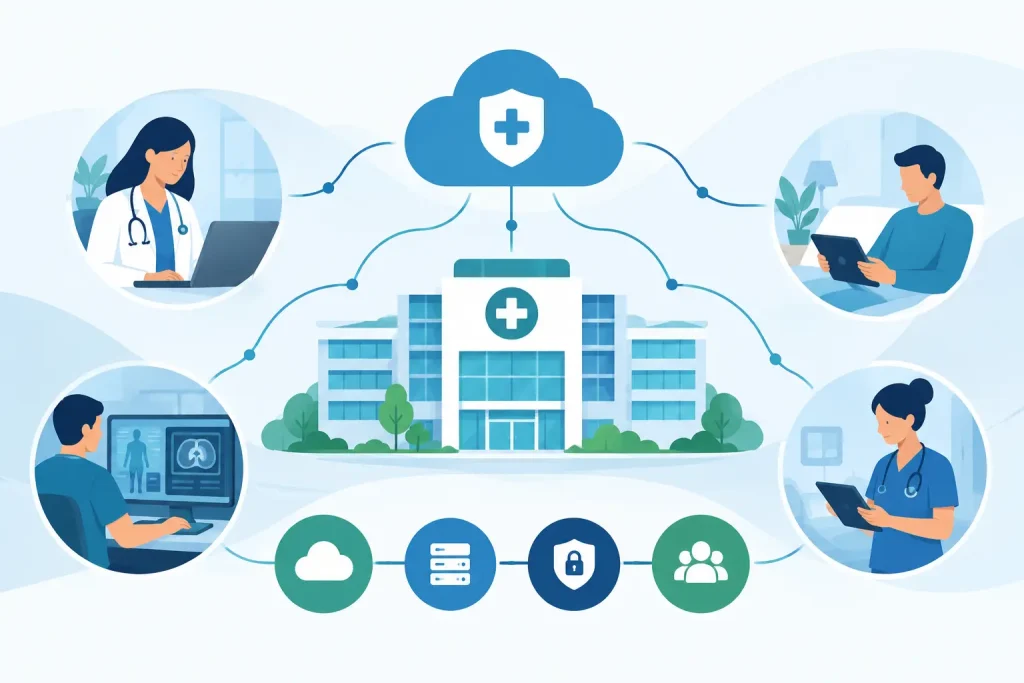

A password reset is rarely just a password reset. In a healthcare clinic, it can delay patient intake. In a senior living community, it can interrupt staff communication. In a multi-site retail environment, it can stop a register, a handheld device, or a back-office workflow at the worst possible time. That is why help desk support services matter more than most organizations expect. They are not a side function. They are part of the operating model that keeps the business moving.
For organizations with multiple locations, regulated environments, or thin internal IT bandwidth, the quality of support shows up fast. You see it in how quickly users get back to work, how often issues come back, and whether anyone actually owns the problem from first call to final fix. The gap between basic ticket handling and true operational support is where many businesses lose time, money, and confidence.
What help desk support services should actually deliver
A capable help desk does more than answer calls and close tickets. It acts as the front line for user productivity, issue triage, and service continuity. When support is working the way it should, employees know where to go, issues are prioritized correctly, and recurring problems are addressed at the root instead of being patched over.
That requires more than a script and a queue. It requires real process discipline, technical depth, and visibility into the broader environment. If a user cannot connect to Wi-Fi, the problem may be the device, the access point, the switch, the ISP circuit, a security policy, or a bad credential sync. A support team that only sees one layer will often bounce the issue somewhere else. A team that owns the full stack can isolate the cause and move faster.
This is where many outsourced models fall short. They are built to deflect volume, not resolve business-critical problems. They may hit basic response metrics while still leaving your staff to chase updates, repeat explanations, and coordinate with other vendors. That is not support. That is administrative drag.
The real business case for help desk support services
Leaders do not invest in support because tickets are annoying. They invest because downtime is expensive, fragmented accountability creates risk, and employee frustration eventually becomes an operational problem.
In practical terms, good support protects labor efficiency. If your team loses fifteen minutes here and thirty minutes there across dozens or hundreds of users, the cost compounds quickly. The same goes for location managers, clinical teams, leasing staff, teachers, or finance personnel who are forced to troubleshoot technology instead of doing their jobs.
There is also a control issue. Many organizations have built environments where connectivity, phones, cybersecurity, devices, cloud apps, and user support all sit with different providers. When something breaks, no one wants to own it. The help desk becomes a traffic cop instead of a resolution engine. That model may look cheaper on paper, but it often creates hidden costs through delays, duplicate effort, and poor incident management.
For industries where uptime directly affects service delivery or compliance, the stakes are even higher. A missed alert, an unavailable workstation, or a failed login can create much bigger consequences than a single frustrated user. Support has to be tied to resilience.
What separates a strong service desk from a weak one
The difference usually comes down to ownership, context, and escalation quality.
Ownership means the team does not stop at ticket intake. They stay with the issue, communicate clearly, and drive it to resolution. That sounds simple, but many support providers are structured to hand work off as fast as possible. The result is long resolution paths and unclear accountability.
Context matters because users do not report problems in technical terms. They report symptoms. A nurse may say a workstation is slow. A property manager may say the phones are acting up. A retail supervisor may say the internet is down when the real issue is local wireless coverage. Effective support teams understand the client environment well enough to translate symptoms into likely causes.
Escalation quality is what keeps routine issues from becoming business interruptions. A mature support operation knows what can be solved at first contact, what needs engineering review, and what requires coordination across infrastructure, voice, security, or carriers. That handoff has to be fast and structured. Real engineers, not a 1-800 black hole.
Why one-vendor accountability changes the outcome
Help desk support is strongest when it is part of a managed environment rather than an isolated service. If the same partner supports endpoints, networks, voice, connectivity, and security, there is far less finger-pointing when an issue spans systems.
That matters in the real world because many incidents do span systems. A VoIP outage may be a circuit issue. A cloud application problem may come back to DNS, identity management, or endpoint protection. A remote user issue may involve policy, hardware, and connectivity at the same time. When different vendors own different slices, the client ends up managing the incident.
One-vendor accountability does not mean every problem is simple. It means there is one team that owns the whole stack and is responsible for driving the answer. For operations leaders and IT managers, that is often the difference between a contained disruption and a half-day fire drill.
How to evaluate help desk support services
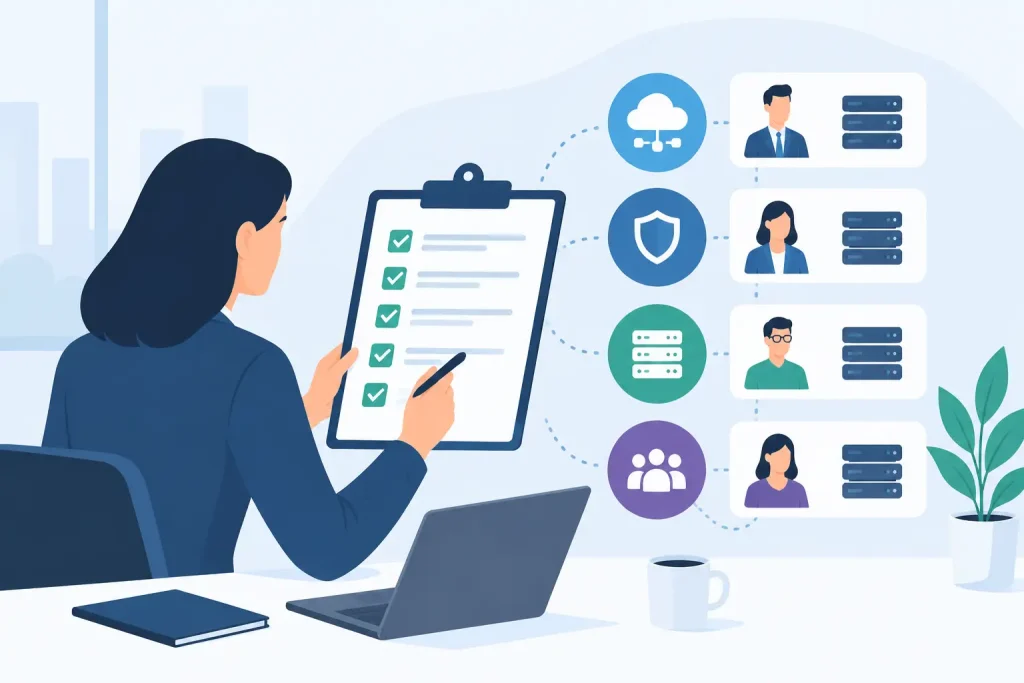
If you are comparing providers, start with the operating model, not the sales pitch. Ask who answers the phone, where tickets go, how escalation works, and what systems the support team can actually touch. A provider can claim broad support while having very limited authority or technical access behind the scenes.
Service levels matter, but they are only part of the picture. Fast response is useful. Fast resolution is what counts. A ticket acknowledged in five minutes but unresolved for hours is not a win if your team is still stuck.
You should also look for reporting that ties support activity to business performance. Ticket volume, first-response times, recurring issue categories, after-hours trends, and location-level patterns all tell you whether the environment is stable or drifting into preventable failure. Good providers use that data to improve the environment over time, not just to show they were busy.
It also helps to test for industry fit. A support model that works for a generic office may not work for a healthcare network, a senior living operator, or a distributed retail group. Your provider should understand what downtime means in your context, which issues are urgent, and how support has to align with compliance, staffing, and customer experience.
Common trade-offs to think through
Not every organization needs the same support structure. A business with a strong internal IT department may only need overflow coverage, after-hours support, or endpoint assistance. A multi-site operator with limited in-house resources may need a fully managed service desk backed by network, voice, and security engineering.
There is also a cost trade-off. The lowest-cost help desk option may be enough for simple environments, but it usually comes with narrower scope, weaker escalation, and less ownership. For businesses where downtime affects revenue, care delivery, resident experience, or tenant operations, those trade-offs can become expensive quickly.
Coverage hours are another factor. Some organizations truly need 24/7 support. Others need strong business-hours coverage plus on-call escalation for critical events. The right answer depends on how your business runs, not on a generic service package.
Where help desk support fits in a resilient IT strategy
The best support services do not sit off to the side. They connect directly to monitoring, patching, asset visibility, cybersecurity controls, user lifecycle management, and network performance. That connection matters because users often surface problems before monitoring tools do, and monitoring tools often reveal patterns users cannot see.
When those functions are integrated, support becomes more proactive. The help desk can identify recurring device failures, application access issues, poor wireless performance, or misaligned policies and feed that information back into the managed environment. Over time, ticket counts go down because the underlying systems get better.
That is the model many growth-oriented organizations need now. Not just someone to answer the phone, but a support function tied to infrastructure accountability and business continuity. Southeast Networks approaches help desk support this way because support only works when it is connected to the rest of the environment and owned end to end.
A good help desk should make technology feel controlled, not chaotic. If your users are still chasing updates, repeating the same issue to multiple vendors, or waiting too long for someone to take responsibility, the problem is not just support quality. It is the operating model behind it. Fix that, and the business runs with a lot less friction.